

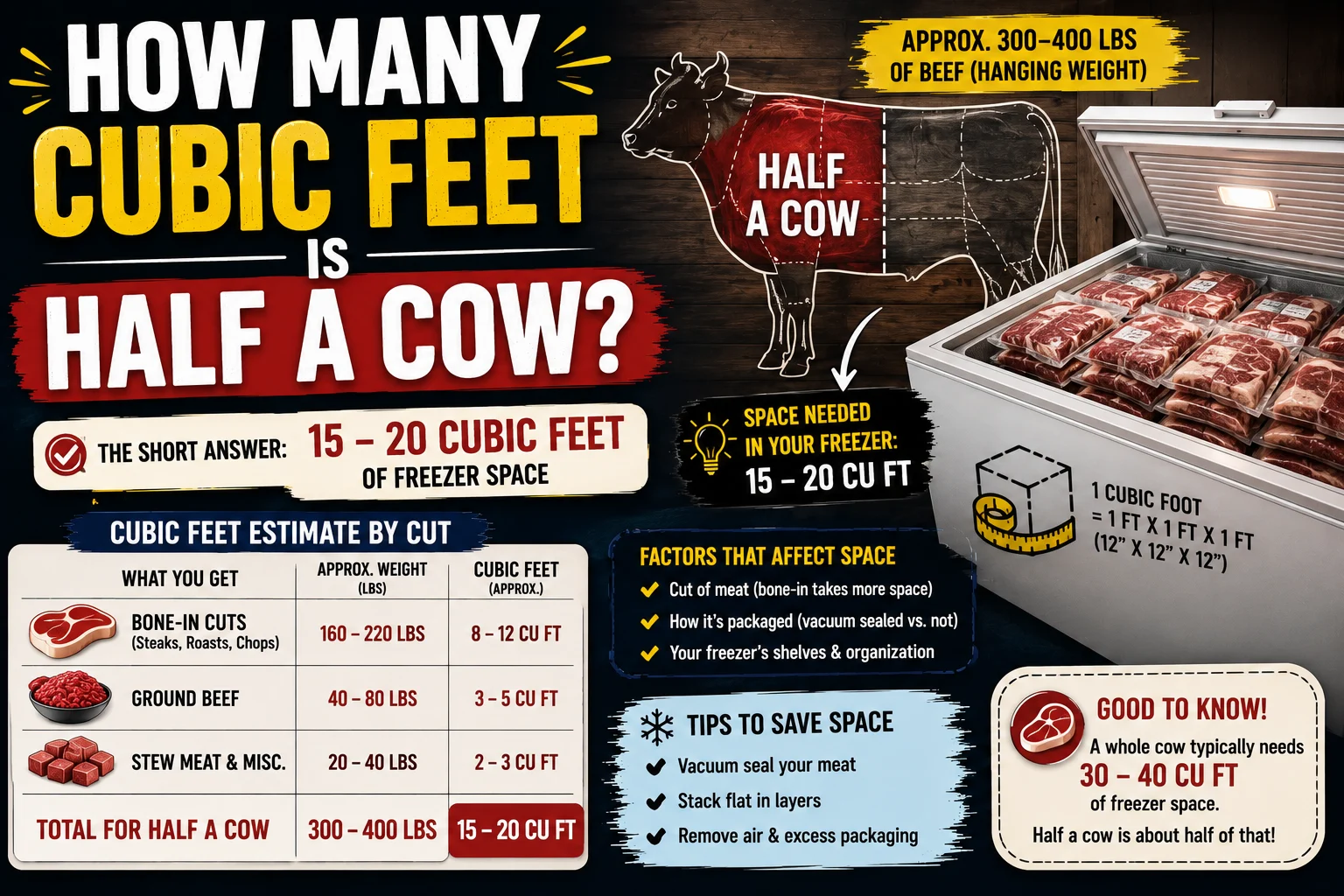
Buying half a cow is an excellent way to save money, stock up on high-quality beef, and reduce trips to the grocery store. One of the biggest questions buyers ask before purchasing is:
How many cubic feet is half a cow?
Quick Answer
A half cow (half beef) typically requires:
- 8–12 cubic feet of freezer space
Most families should plan for at least a 10 cubic foot freezer to comfortably store all packaged beef while leaving room for airflow and organization.
The exact amount depends on:
- Hanging weight
- Packaged meat yield
- Cut selections
- Packaging method
- Freezer organization
Average Freezer Space Needed
| Beef Purchase | Recommended Freezer Space |
|---|---|
| Quarter cow | 4–6 cubic feet |
| Half cow | 8–12 cubic feet |
| Whole cow | 16–24 cubic feet |
These recommendations are based on professionally processed, vacuum-sealed beef.
How Much Meat Do You Get From Half a Cow?
The amount of beef you receive depends on the animal’s size.
Typical estimates:
| Measurement | Approximate Weight |
| Live weight | 1,100–1,300 lbs |
| Hanging weight | 600–800 lbs |
| Packaged beef (half) | 180–250 lbs |
Most customers take home between 180 and 250 pounds of packaged beef from a half cow.
Why Freezer Space Varies
Not every half cow requires the same amount of freezer space.
Factors include:
Animal Size
Larger cattle produce more meat.
Bone-In vs. Boneless Cuts
Bone-in steaks and roasts occupy more space.
Packaging Style
Vacuum-sealed packages are more compact than butcher paper.
Ground Beef Packaging
One-pound packages stack differently than larger bulk packages.
Organization
A neatly organized freezer holds more than one filled randomly.
Recommended Freezer Sizes
7 Cubic Feet
Suitable for:
- Quarter cow
- Small meat purchases
May be too small for most half cows.
10 Cubic Feet
Ideal for:
- Most half cows
- Easy organization
- Room for additional frozen foods
This is the most commonly recommended size.
15 Cubic Feet
Excellent for:
- Large half cows
- Families
- Extra food storage
Leaves additional storage space.
20 Cubic Feet
Recommended for:
- Whole cow
- Hunters
- Large families
- Bulk food storage
Chest Freezer vs. Upright Freezer
Chest Freezer
Advantages:
- Better energy efficiency
- More usable storage
- Holds temperature longer during power outages
- Lower operating costs
Disadvantages:
- Harder to organize
- Requires bending
Upright Freezer
Advantages:
- Easier organization
- Shelves
- Better visibility
Disadvantages:
- Slightly less usable storage
- Uses more electricity
Either style works well if it provides sufficient cubic footage.
Typical Cuts You’ll Receive
A half cow often includes:
- Ribeye steaks
- Sirloin steaks
- T-bone steaks
- Filet mignon
- Chuck roast
- Rump roast
- Brisket
- Short ribs
- Ground beef
- Stew meat
- Soup bones
The exact cuts depend on your butcher and custom cutting instructions.
How Long Does Beef Last in the Freezer?
Properly frozen beef can remain high quality for:
| Beef Type | Best Quality |
| Steaks | 12 months |
| Roasts | 12 months |
| Ground beef | 3–4 months |
| Vacuum-sealed beef | Up to 2 years (quality varies) |
Always maintain a freezer temperature of 0°F (-18°C) or lower.
Tips for Organizing a Half Cow
To maximize freezer space:
- Label every package.
- Group similar cuts together.
- Stack ground beef vertically.
- Rotate older packages to the front.
- Keep an inventory sheet.
- Leave small air gaps for circulation.
Good organization makes it easier to find cuts and reduces waste.
Is Buying Half a Cow Worth It?
Many families choose bulk beef purchases because they offer:
- Lower cost per pound
- Consistent meat quality
- Larger selection of cuts
- Fewer grocery trips
- Greater control over processing preferences
However, buyers should ensure they have enough freezer capacity before purchasing.
FAQs
How many cubic feet do I need for half a cow?
Most buyers need 8–12 cubic feet of freezer space.
Is a 10 cubic foot freezer big enough?
Yes.
A 10 cubic foot chest freezer is generally ideal for storing a typical half cow.
How much packaged meat comes from half a cow?
Most people receive 180–250 pounds of packaged beef.
Can a 7 cubic foot freezer hold half a cow?
Usually not comfortably.
A 7 cubic foot freezer is better suited for a quarter cow.
How much freezer space does a whole cow require?
Most whole cows need 16–24 cubic feet of freezer space.
Is vacuum-sealed beef easier to store?
Yes.
Vacuum-sealed packages are more compact and typically last longer than paper-wrapped meat.
Does bone-in beef require more freezer space?
Yes.
Bone-in cuts occupy more room than boneless cuts.
Common Mistakes to Avoid
- Buying beef before measuring freezer capacity.
- Overfilling the freezer.
- Forgetting to label packages.
- Ignoring airflow requirements.
- Mixing old and new inventory.
Proper planning helps maximize storage and preserve meat quality.
Quick Facts
- Half a cow typically requires 8–12 cubic feet of freezer space.
- Most buyers receive 180–250 pounds of packaged beef.
- A 10 cubic foot chest freezer is the most common recommendation.
- Vacuum-sealed beef stores more efficiently than butcher paper.
- Organization improves freezer capacity and food quality.
Final Thoughts
A half cow typically requires between 8 and 12 cubic feet of freezer space, depending on the animal’s size, processing method, and packaging. For most households, a 10 cubic foot chest freezer offers the ideal balance of storage capacity and organization. Before purchasing bulk beef, verify your available freezer space and discuss packaging options with your butcher to ensure your investment stays fresh and easy to manage.