

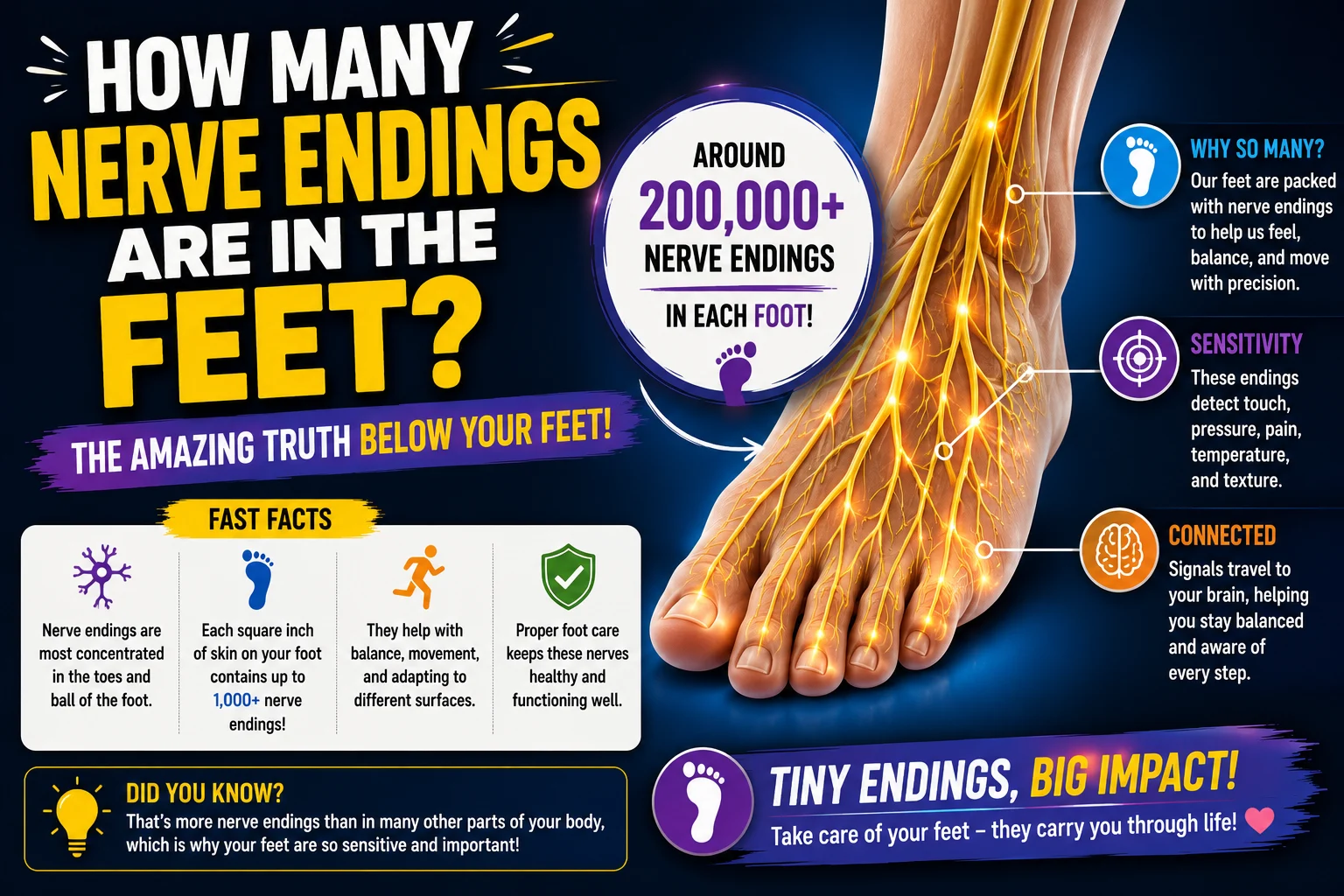
Your feet do much more than support your body they’re packed with an incredible network of nerves that help you walk, balance, and sense the world beneath you. One of the most common questions people ask is:
How many nerve endings are in the feet?
Quick Answer
Each foot contains more than 7,000 nerve endings.
That means both feet together have over 14,000 nerve endings, making them one of the most sensitive parts of the human body.
These nerve endings help you:
- Feel pressure
- Detect temperature
- Sense pain
- Maintain balance
- Coordinate movement
What Are Nerve Endings?
Nerve endings are specialized sensory receptors connected to your nervous system.
They collect information about:
- Touch
- Pressure
- Heat
- Cold
- Pain
- Vibration
- Position of your body (proprioception)
The brain constantly receives signals from these receptors to help control movement and protect the body from injury.
Why Are Feet So Sensitive?
Your feet support your entire body weight while constantly adapting to different surfaces.
Thousands of nerve endings provide real-time feedback so your brain can:
- Keep you balanced
- Adjust posture
- Prevent falls
- React quickly to sharp or hot objects
Without these sensory signals, walking would be extremely difficult.
Major Nerves in the Foot
Several large nerves branch into thousands of smaller nerve endings throughout the foot.
These include:
Tibial Nerve
Supplies most of the sole of the foot and toes.
Deep Peroneal Nerve
Provides sensation to the top of the foot and between the first two toes.
Superficial Peroneal Nerve
Carries sensation across much of the upper foot.
Sural Nerve
Supplies the outer edge of the foot and heel.
Together, these nerves divide into thousands of tiny sensory branches.
Where Are Most Nerve Endings Located?
Although nerve endings are found throughout the foot, they are especially concentrated in:
- Toes
- Ball of the foot
- Heel
- Arch
- Sole
The soles contain the highest concentration because they constantly interact with the ground.
Why Nerve Endings Matter
The thousands of nerve endings in your feet perform several important jobs.
Balance
They help your brain determine exactly where your body is standing.
Walking
Nerve signals coordinate muscles and joints during every step.
Protection
They alert you if you step on:
- Sharp objects
- Hot surfaces
- Rough terrain
Coordination
Your brain continuously adjusts your posture based on sensory information from your feet.
Can Nerve Damage Affect the Feet?
Yes.
Damage to foot nerves may cause:
- Numbness
- Tingling
- Burning sensations
- Weakness
- Loss of balance
- Difficulty walking
Conditions commonly associated with foot nerve damage include:
- Diabetes
- Peripheral neuropathy
- Injuries
- Vitamin deficiencies
- Certain neurological disorders
Common Symptoms of Foot Nerve Problems
You should speak with a healthcare professional if you experience:
- Persistent numbness
- Burning pain
- Pins and needles
- Loss of feeling
- Muscle weakness
- Frequent falls
Early treatment often prevents further complications.
Why Foot Massage Feels Good
Many people enjoy foot massages because stimulating thousands of nerve endings creates relaxing sensory input.
Massage may help:
- Reduce muscle tension
- Improve circulation
- Relieve stress
- Ease foot fatigue
While massage can feel beneficial, claims that specific areas of the foot directly treat internal organs (as suggested by some reflexology theories) are not strongly supported by scientific evidence.
Feet and Balance
Your feet constantly communicate with:
- Eyes
- Inner ears
- Brain
- Muscles
These systems work together to keep you upright.
Even small changes in sensation can affect stability and walking confidence.
Interesting Facts About Human Feet
- Each foot contains 26 bones.
- Both feet together contain 52 bones, about one-quarter of all the bones in the human body.
- Each foot has 33 joints.
- More than 100 muscles, tendons, and ligaments work together in each foot.
- Each foot contains over 7,000 nerve endings.
Tips for Keeping Foot Nerves Healthy
To protect your foot nerves:
- Wear properly fitting shoes.
- Stay physically active.
- Manage blood sugar if you have diabetes.
- Avoid smoking.
- Check your feet regularly for injuries.
- Stretch your feet and ankles.
- Maintain a healthy weight.
Good foot care supports both comfort and long-term mobility.
FAQs
How many nerve endings are in one foot?
Each foot contains more than 7,000 nerve endings.
How many nerve endings are in both feet?
Together, both feet contain over 14,000 nerve endings.
Are feet the most sensitive body part?
Feet are among the most sensitive areas of the body, although the fingertips, lips, and tongue generally have an even higher density of touch receptors.
Why do foot massages feel relaxing?
Massages stimulate thousands of sensory nerve endings, which can reduce tension and promote relaxation.
Can damaged foot nerves heal?
Some nerve injuries improve over time, while others may require medical treatment. Recovery depends on the underlying cause and the severity of the damage.
Why do diabetic patients need regular foot checks?
Diabetes can damage nerves in the feet, reducing sensation and increasing the risk of unnoticed injuries and infections.
Do all people have the same number of nerve endings?
The overall number is similar among healthy adults, but sensitivity may vary due to age, health conditions, and individual differences.
Common Myths
Myth: Feet have exactly 7,000 nerve endings.
Fact: The commonly cited figure is more than 7,000 nerve endings per foot, making it an estimate rather than an exact count.
Myth: Every foot massage cures diseases.
Fact: Massage can relieve stress and muscle tension, but it is not a proven cure for medical conditions.
Quick Facts
- Each foot has over 7,000 nerve endings.
- Both feet contain more than 14,000 nerve endings.
- Feet contain 26 bones each.
- They help with balance, movement, and sensation.
- Healthy nerves are essential for safe walking and coordination.
Final Thoughts
Each human foot contains more than 7,000 nerve endings, making the feet one of the most sensitive and important parts of the body. These nerve endings allow you to sense touch, temperature, pressure, and pain while helping maintain balance and coordination with every step. Keeping your feet healthy through proper footwear, regular exercise, and good foot care helps protect this remarkable network of nerves and supports lifelong mobility.