
If you are wondering how many 0.5 cubic feet bags in a cubic yard, the answer is straightforward once you understand how volume conversion works.
A cubic yard is a standard unit used in landscaping and construction, while 0.5 cubic feet bags are common for mulch, soil, and compost.
Quick Answer
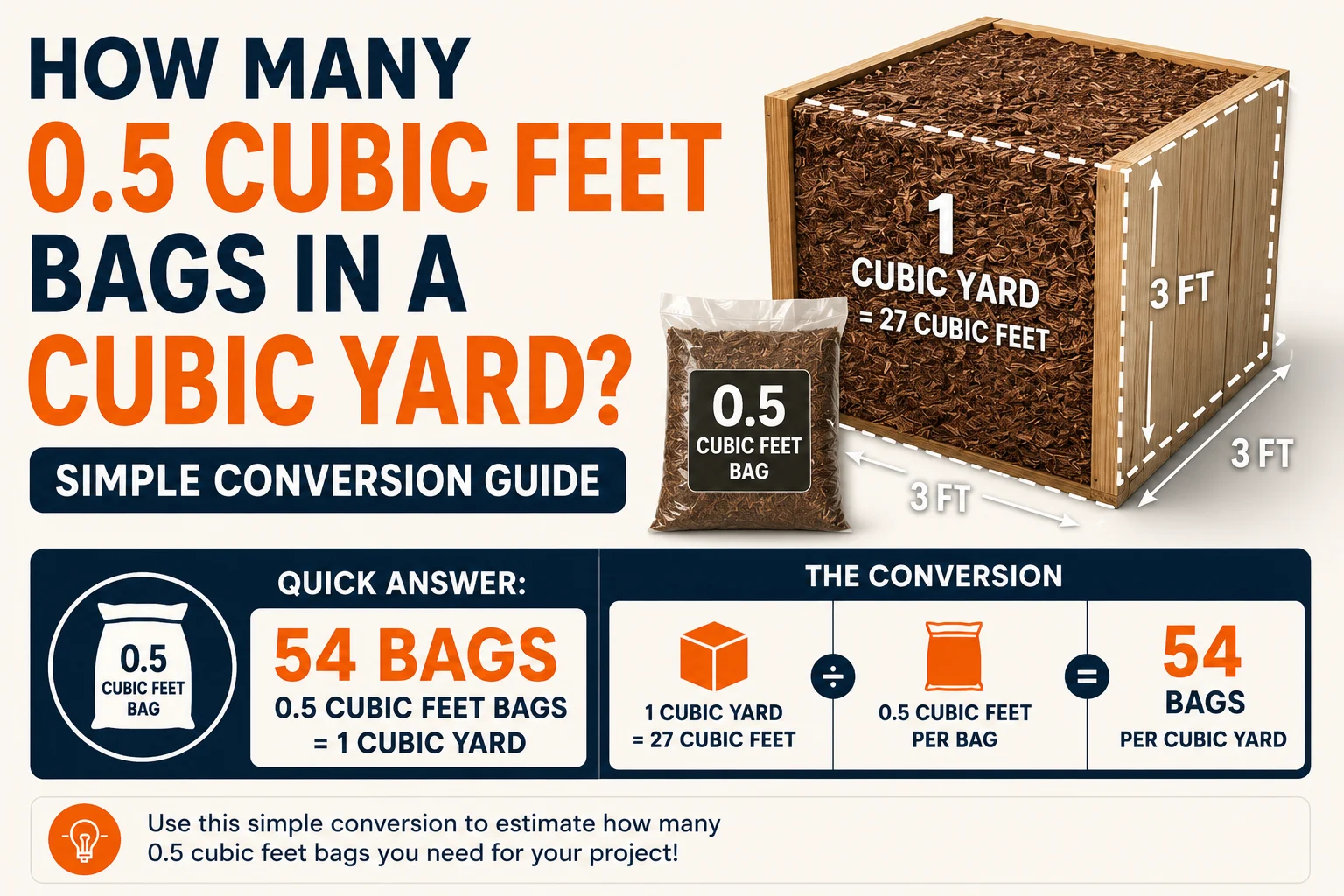
There are 54 bags of 0.5 cubic feet in one cubic yard.
This means:
- 1 cubic yard = 27 cubic feet
- Each bag = 0.5 cubic feet
- 27 ÷ 0.5 = 54 bags
So you need 54 small bags to equal one full cubic yard.
Understanding Cubic Yards and Cubic Feet
Before doing conversions, it helps to understand the units:
Cubic Foot
A cube measuring:
- 1 ft × 1 ft × 1 ft
Cubic Yard
A larger volume unit used in construction:
1 cubic yard=3×3×3=27 cubic feet
So a cubic yard is significantly larger than a cubic foot.
Step-by-Step Conversion
Let’s break it down:
Step 1: Convert cubic yards to cubic feet
1 yard=27 cubic feet
Step 2: Divide by bag size
27÷0.5=54
Final result:
54 bags of 0.5 cubic feet
Why the Conversion Works
This works because:
- All volume units must match
- You convert everything into cubic feet first
- Then divide total volume by bag size
It’s simple ratio math used in landscaping and construction planning.
Real-World Landscaping Examples
Example 1: Mulch for a Garden
If a garden bed requires 1 cubic yard:
- You need 54 small mulch bags
Example 2: Soil for Raised Beds
For raised garden beds:
- 2 cubic yards = 108 bags
Example 3: Small Yard Project
If you only need half a yard:
- 0.5 yard = 27 bags
Comparison With Other Bag Sizes
Different bag sizes change the total:
| Bag Size | Bags per Cubic Yard |
|---|---|
| 0.5 cu ft | 54 bags |
| 1 cu ft | 27 bags |
| 2 cu ft | 13.5 bags |
| 3 cu ft | 9 bags |
So larger bags reduce the total number needed.
Cost and Material Planning Tips
Buying Bags vs Bulk
- Bags = convenient but expensive
- Bulk = cheaper per cubic yard
Delivery Considerations
- One cubic yard of bulk material equals a large pickup truck load
- Bagged material is easier for small projects
Waste Factor
Always add:
- 5%–10% extra material for settling and spreading loss
Common Mistakes
Confusing cubic feet with cubic yards
A cubic yard is 27 times larger than a cubic foot.
Forgetting bag size
Not all bags are 0.5 cubic feet.
Not rounding properly
You may need to round up when buying materials.
Ignoring compaction
Soil and mulch settle over time.
Expert Tips
Always check bag labels
Manufacturers vary in size.
Convert before purchasing
Avoid buying too few or too many bags.
Use bulk for large projects
Anything over 2–3 cubic yards is usually cheaper in bulk.
Keep extra for topping up
Landscaping materials settle after rain and watering.
Frequently Asked Questions
1. How many 0.5 cubic feet bags are in a cubic yard?
There are 54 bags per cubic yard.
2. How many cubic feet are in a cubic yard?
There are 27 cubic feet in one cubic yard.
3. Is it cheaper to buy bulk or bags?
Bulk is usually cheaper for large projects.
4. How many 1 cubic foot bags equal a yard?
There are 27 bags of 1 cubic foot.
5. How do I calculate how many bags I need?
Divide total cubic yards × 27, then divide by bag size.
Conclusion
So, how many 0.5 cubic feet bags in a cubic yard?
There are 54 bags of 0.5 cubic feet in one cubic yard.
This conversion is essential for landscaping, gardening, and construction planning. Understanding it helps you buy the right amount of material, avoid waste, and manage your project efficiently.