
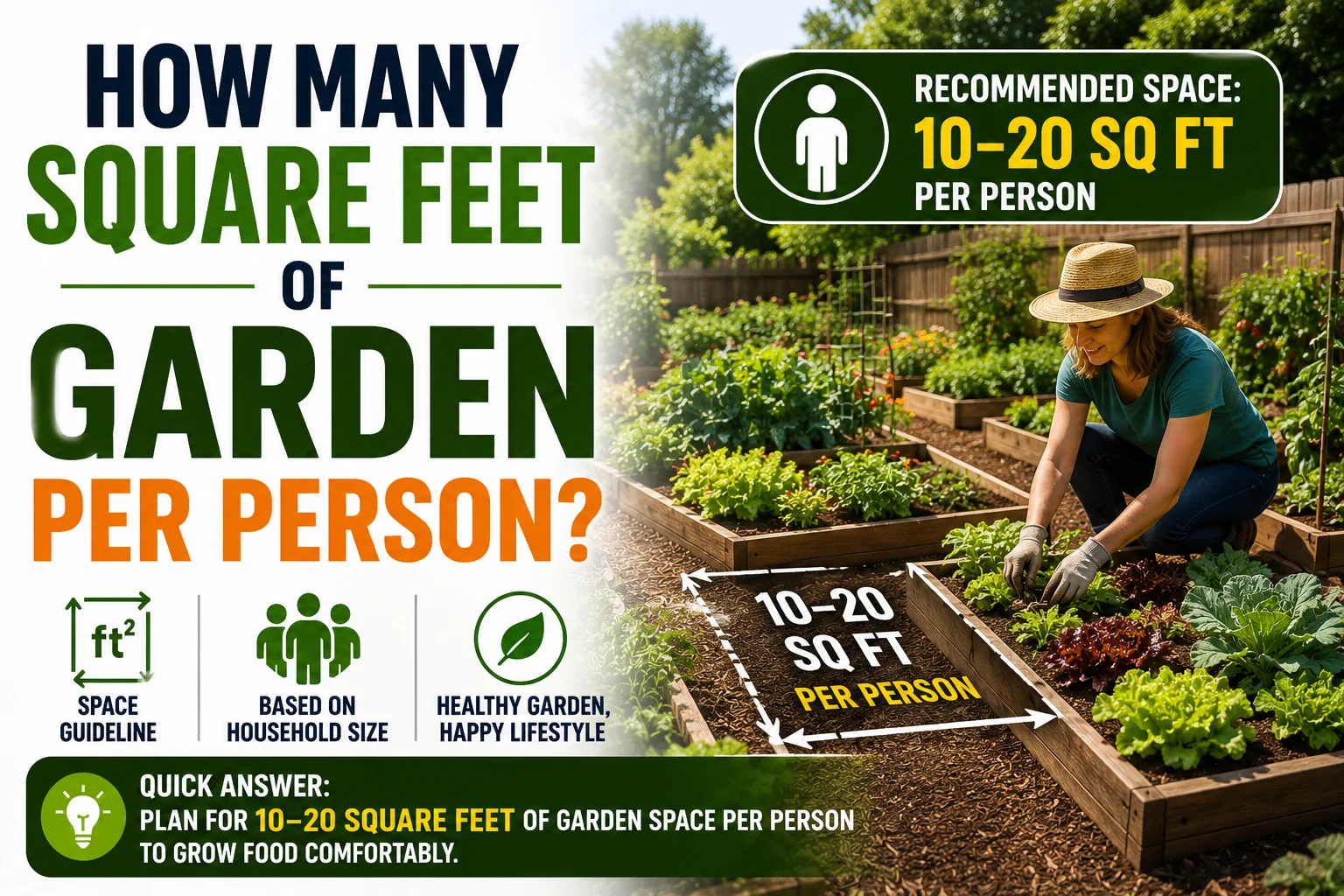
If you’re planning to grow your own food, one of the first questions you’ll likely ask is how many square feet of garden per person you need. The answer depends on your goals. Are you looking to grow a few fresh vegetables for summer meals, or do you want to produce enough food to feed your family for most of the year?
As a general guideline:
- 100–200 square feet per person is enough for a beginner or someone who wants fresh vegetables during the growing season.
- 200–400 square feet per person is suitable for an experienced gardener who wants a larger harvest and some produce for preserving.
- 600–800 square feet per person may be needed if you aim to grow most of your family’s vegetables year-round, depending on climate, crop selection, and gardening methods.
This guide explains how much space you’ll need, what factors affect garden size, and how to maximize your harvest.
Quick Answer
For most home gardens, the following recommendations work well:
| Gardening Goal | Square Feet Per Person |
|---|---|
| Fresh vegetables only | 100–200 sq ft |
| Regular family meals | 200–300 sq ft |
| Extra produce for freezing or canning | 300–400 sq ft |
| Near self-sufficient vegetable supply | 600–800 sq ft |
A 200-square-foot garden per person is a practical starting point for many households.
Why Garden Size Matters
The size of your garden influences how much food you can grow, how much time you’ll spend maintaining it, and how much produce you’ll harvest.
Some crops, such as lettuce and herbs, produce well in small spaces. Others, like pumpkins or sweet corn, require much more room.
Fresh Vegetables vs. Full Food Supply
If your goal is simply to enjoy homegrown tomatoes, peppers, and salads, you won’t need a large garden.
However, supplying most of your family’s vegetables year-round requires additional space for storage crops like potatoes, onions, carrots, squash, and beans.
Factors That Affect Garden Size
Several factors determine how much space you’ll need:
- Number of people in your household
- Types of vegetables you grow
- Climate and growing season
- Soil quality
- Raised beds vs. in-ground planting
- Succession planting
- Vertical gardening techniques
Recommended Garden Size Per Person
Beginner Garden
For someone new to gardening, 100–150 square feet per person is usually enough.
This allows space for easy-to-grow crops such as:
- Tomatoes
- Lettuce
- Cucumbers
- Bush beans
- Carrots
- Spinach
- Herbs
Average Vegetable Garden
A garden of 200–300 square feet per person provides a wider variety of vegetables and larger harvests.
You can typically grow:
- Tomatoes
- Peppers
- Cucumbers
- Zucchini
- Green beans
- Leafy greens
- Root vegetables
- Herbs
With good planning, this size can produce fresh vegetables throughout much of the growing season.
Garden for Food Preservation
If you plan to freeze, dry, or can vegetables, increase your garden size to 300–400 square feet per person.
This provides room for larger quantities of:
- Tomatoes
- Corn
- Potatoes
- Onions
- Winter squash
- Green beans
Near Self-Sufficient Garden
A garden of 600–800 square feet per person may support most of one person’s annual vegetable needs when combined with good soil, succession planting, and proper storage.
Keep in mind that producing all of your food—including grains, fruits, and protein—would require significantly more land.
Garden Size Chart by Family Size
| Family Size | Fresh Vegetables | Large Harvest |
|---|---|---|
| 1 person | 100–200 sq ft | 300–600 sq ft |
| 2 people | 200–400 sq ft | 600–1,200 sq ft |
| 3 people | 300–600 sq ft | 900–1,800 sq ft |
| 4 people | 400–800 sq ft | 1,200–2,400 sq ft |
| 5 people | 500–1,000 sq ft | 1,500–3,000 sq ft |
These are estimates and can vary depending on crop choices and gardening methods.
How to Calculate Garden Space
Planning your garden is easier when you break the process into steps.
Step 1: Measure Your Available Area
Measure the length and width of your garden.
For example:
20 feet × 10 feet = 200 square feet
To visualize a rectangular garden:
A=lw
A=6×4=24
4 rows by 6 columns = 24 square units.
w
w
l
l24 square unitsw = 6l = 4
Step 2: Choose Your Crops
Different vegetables need different amounts of space.
| Crop | Space Needed |
|---|---|
| Lettuce | Low |
| Spinach | Low |
| Radishes | Low |
| Tomatoes | Medium |
| Peppers | Medium |
| Cucumbers | Medium (less if trellised) |
| Potatoes | High |
| Pumpkins | Very High |
| Sweet Corn | High |
Step 3: Include Walkways
Don’t forget to allow space for paths between rows or raised beds.
Walkways improve:
- Accessibility
- Air circulation
- Weed control
- Harvesting convenience
Raised Beds vs. Traditional Gardens
Raised beds often produce more food in less space because they allow for:
- Better soil quality
- Improved drainage
- Closer plant spacing
- Easier maintenance
A common raised bed measures 4 × 8 feet, providing 32 square feet of growing space.
Several raised beds can supply a significant portion of a family’s fresh vegetables.
Crops That Produce the Most Food
To maximize harvests in a limited space, focus on high-yield vegetables such as:
- Pole beans
- Tomatoes
- Cucumbers (grown vertically)
- Zucchini
- Swiss chard
- Kale
- Leaf lettuce
- Peas
These crops offer a high return for the space they occupy.
Common Garden Planning Mistakes
Avoid these mistakes:
- Planting more than you can maintain
- Ignoring plant spacing recommendations
- Forgetting crop rotation
- Overcrowding plants
- Neglecting watering and soil preparation
- Skipping succession planting
Proper planning leads to healthier plants and higher yields.
Expert Gardening Tips
To get the most from your garden:
- Start small and expand each season.
- Improve your soil with compost.
- Grow vertically using trellises for cucumbers and beans.
- Practice succession planting to harvest continuously.
- Choose varieties suited to your local climate.
- Mulch around plants to conserve moisture and reduce weeds.
These strategies help increase productivity without requiring much more space.
FAQs
1. How many square feet of garden per person do I need?
For most people, 100–200 square feet is enough for fresh vegetables, while 200–400 square feet provides larger harvests and extra produce for preserving.
2. Is a 4×8 raised bed enough for one person?
A single 4×8 raised bed (32 square feet) is ideal for growing herbs and a selection of vegetables, but it won’t produce all the vegetables one person typically eats in a year.
3. How much garden space does a family of four need?
A family of four generally needs 400–800 square feet for fresh vegetables, or 1,200–2,400 square feet if they want to preserve food and enjoy larger harvests.
4. What vegetables produce the most in a small garden?
High-yield crops include tomatoes, pole beans, cucumbers, lettuce, spinach, zucchini, kale, and Swiss chard.
5. Can I grow enough vegetables in a small backyard?
Yes. With raised beds, vertical gardening, and succession planting, even a modest backyard can produce a surprising amount of fresh vegetables throughout the growing season.
Conclusion
If you’re wondering how many square feet of garden per person you need, a good starting point is 100–200 square feet for fresh vegetables and 200–400 square feet for larger harvests and food preservation. Garden size depends on your goals, crop choices, climate, and gardening methods, so there’s no one-size-fits-all answer.
By planning carefully, choosing productive crops, improving your soil, and using space-efficient techniques like raised beds and vertical gardening, you can enjoy abundant harvests even in a relatively small area.
Ready to start your vegetable garden? Use the recommendations in this guide to plan the right-sized garden for your household and enjoy fresh, homegrown produce all season long.