

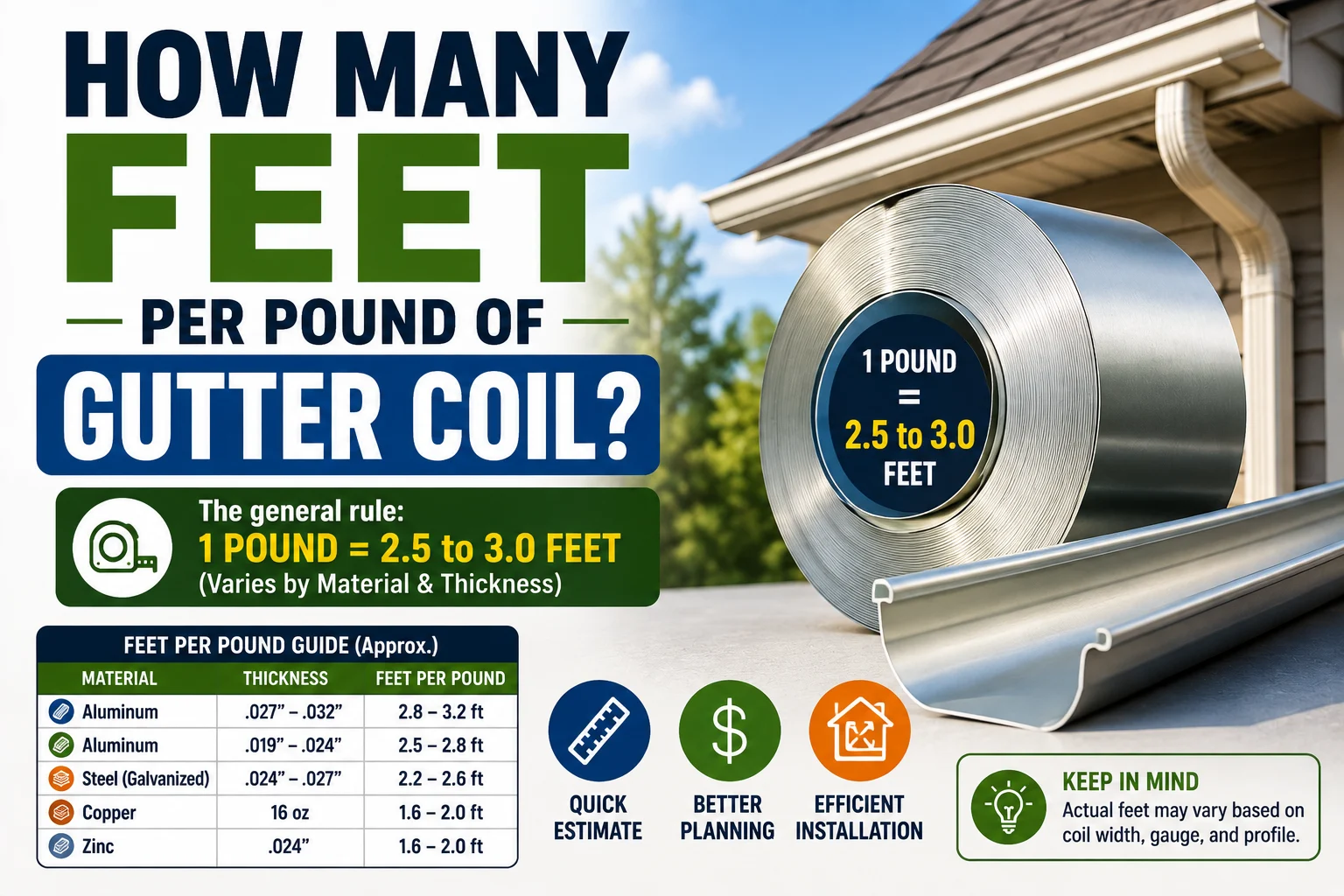
If you’re installing seamless gutters or estimating materials for a roofing project, you may be wondering how many feet per pound of gutter coil you can expect. The answer depends on the coil width, aluminum thickness (gauge), and the size of the gutter you’re forming.
For the most common 0.027-inch aluminum gutter coil, installers generally use these averages:
- 5-inch gutter: about 2.0–2.3 linear feet per pound
- 6-inch gutter: about 1.6–1.9 linear feet per pound
For example, a 310-pound roll of 5-inch gutter coil typically produces about 620–700 linear feet of seamless gutter.
This guide explains how gutter coil is measured, how to estimate footage, and what factors affect the amount of gutter you can produce from each pound of aluminum.
Quick Answer
The following estimates apply to standard 0.027-inch aluminum gutter coil:
| Gutter Size | Approximate Feet Per Pound |
|---|---|
| 5-inch seamless gutter | 2.0–2.3 ft/lb |
| 6-inch seamless gutter | 1.6–1.9 ft/lb |
Actual footage varies slightly by manufacturer and aluminum alloy.
What Is Gutter Coil?
Gutter coil is a roll of flat aluminum that is fed through a portable gutter machine to form seamless gutters on-site.
Instead of joining multiple short sections, installers create one continuous gutter that fits the exact length of the roofline.
Benefits include:
- Fewer leaks
- Faster installation
- Less waste
- Better appearance
- Custom lengths
Why Weight Matters
Gutter coil is sold by weight, while gutters are installed by linear feet.
Knowing the approximate feet per pound helps contractors:
- Estimate material costs
- Order the correct amount of coil
- Reduce job-site waste
- Price gutter installations accurately
Average Feet Per Pound of Gutter Coil
The amount of gutter produced from one pound depends primarily on the finished gutter size.
5-Inch Gutter
The most common residential gutter uses approximately:
2.0–2.3 linear feet per pound
Example:
A 300-pound coil may produce approximately:
300 × 2.2 ≈ 660 feet
6-Inch Gutter
Larger gutters require more aluminum.
Average yield:
1.6–1.9 linear feet per pound
Example:
A 300-pound roll produces approximately:
300 × 1.8 ≈ 540 feet
Gutter Coil Weight Chart
| Coil Weight | 5-Inch Gutter | 6-Inch Gutter |
|---|---|---|
| 50 lb | 100–115 ft | 80–95 ft |
| 100 lb | 200–230 ft | 160–190 ft |
| 150 lb | 300–345 ft | 240–285 ft |
| 250 lb | 500–575 ft | 400–475 ft |
| 310 lb | 620–710 ft | 500–590 ft |
These values are estimates for standard aluminum gutter coil.
Factors That Affect Feet Per Pound
Several factors influence the final linear footage.
Coil Width
A wider coil is required to form a larger gutter.
For example:
- 5-inch gutters use a narrower coil.
- 6-inch gutters use a wider coil.
Because more material is needed, larger gutters produce fewer feet per pound.
Aluminum Thickness
Heavier gauges contain more aluminum per foot.
Common residential gutter coil thicknesses include:
- 0.027 inch
- 0.032 inch
Thicker material reduces the total footage available from the same roll weight.
Manufacturer Specifications
Each manufacturer may use slightly different alloys, widths, or tolerances.
Always check the product specifications if you need precise estimates for bidding or purchasing.
How to Calculate Feet Per Pound
A simple estimating formula is:
Linear Feet = Coil Weight × Feet per Pound
Example:
A 310-pound roll producing 2.2 feet per pound:
310 × 2.2 = 682 linear feet
This estimate helps contractors determine how many rolls are needed for a project.
Estimating Coil Needed for a Project
Suppose a home requires 420 linear feet of 5-inch seamless gutters.
Using an average yield of 2.1 feet per pound:
420 ÷ 2.1 = 200 pounds
Adding 5–10% extra material for setup, test runs, corners, and waste is recommended.
Common Mistakes to Avoid
Avoid these estimation errors:
- Assuming all gutter sizes use the same amount of aluminum.
- Ignoring coil thickness.
- Forgetting material waste during setup.
- Not accounting for corners, downspouts, and end caps.
- Using manufacturer estimates from a different coil gauge.
Accurate estimates reduce costs and improve project planning.
Expert Tips
Professional installers recommend:
- Verify the coil gauge before estimating.
- Include 5–10% extra material for waste.
- Keep records of actual footage produced from each coil brand.
- Store aluminum coils in a dry location to prevent damage.
- Use manufacturer yield charts for the most accurate estimates.
These practices improve estimating accuracy and minimize material shortages.
FAQs
1. How many feet per pound of gutter coil is typical?
For standard 0.027-inch aluminum gutter coil, expect approximately 2.0–2.3 feet per pound for 5-inch gutters and 1.6–1.9 feet per pound for 6-inch gutters.
2. How many feet does a 310-pound gutter coil make?
A 310-pound roll generally produces:
- 620–710 feet of 5-inch gutter
- 500–590 feet of 6-inch gutter
depending on the coil specifications.
3. Does thicker aluminum reduce footage?
Yes. Thicker aluminum weighs more per foot, so a roll of the same total weight will produce fewer linear feet.
4. Why is gutter coil sold by weight?
Aluminum coil is manufactured and shipped in rolls, making weight the standard method for selling and transporting the material. Contractors then estimate the linear footage based on gutter size and coil specifications.
5. Should I order extra gutter coil?
Yes. Most installers recommend ordering 5–10% more than the calculated requirement to cover machine setup, scrap, corners, and unforeseen waste.
Conclusion
If you’re asking how many feet per pound of gutter coil, a practical estimate is 2.0–2.3 linear feet per pound for 5-inch gutters and 1.6–1.9 linear feet per pound for 6-inch gutters when using standard 0.027-inch aluminum coil. The exact yield depends on the gutter size, coil width, aluminum thickness, and manufacturer specifications.
Using these averages, along with a small allowance for waste, helps contractors and homeowners estimate material needs more accurately, reduce delays, and avoid unnecessary costs.
Planning a gutter installation? Use the feet-per-pound estimates and coverage chart in this guide to calculate the amount of gutter coil you’ll need for your next project.