

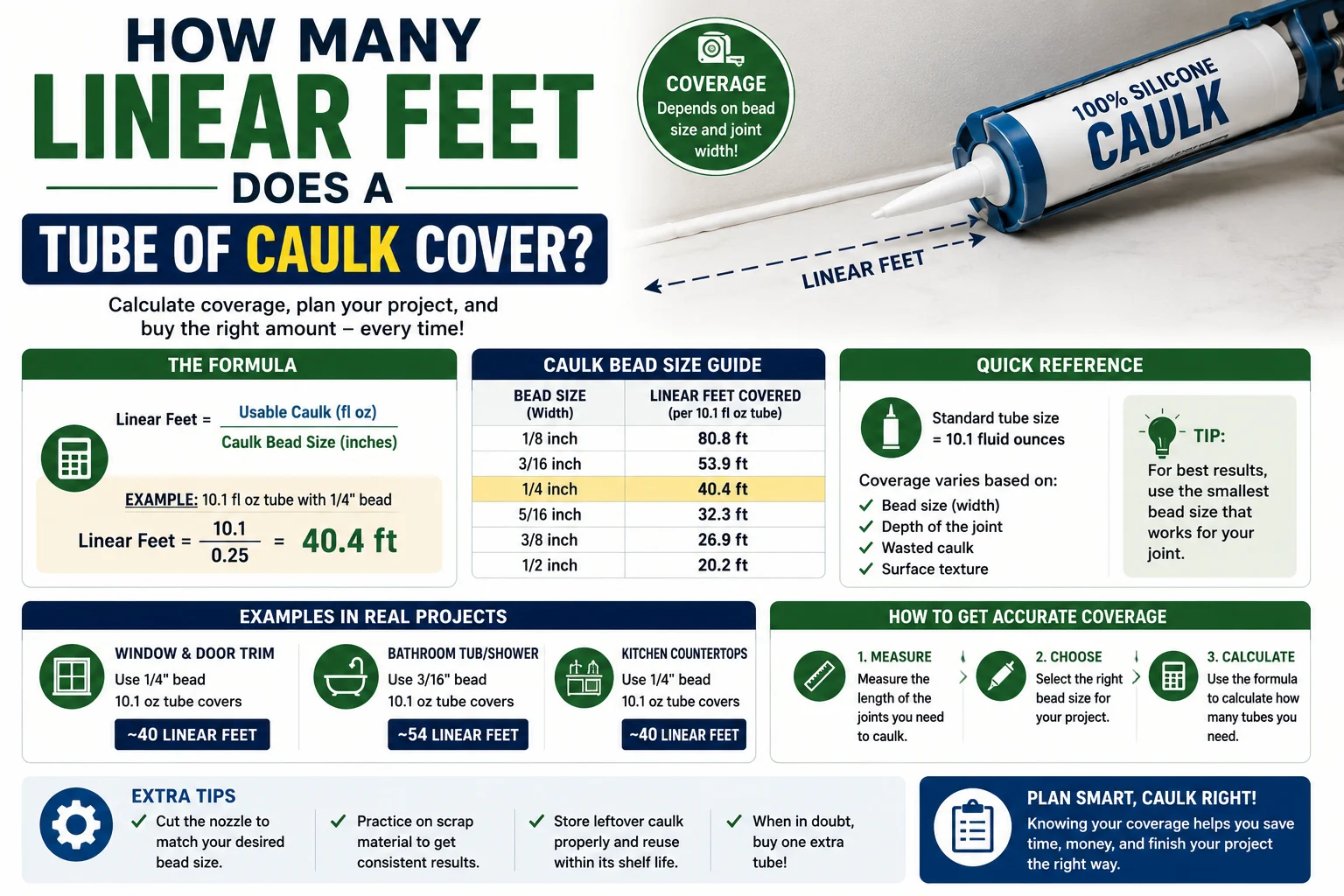
If you are planning a home improvement project, you may be wondering, how many linear feet does a tube of caulk cover? The answer depends on the size of the bead you apply, the width of the joint, and the type of caulk you use.
In general, a standard 10.1-ounce tube of caulk covers between 25 and 55 linear feet for most household applications. Smaller beads can stretch much farther, while larger gaps require more material.
Whether you are sealing windows, installing a bathtub, or caulking baseboards, knowing the coverage of a tube of caulk can save you time, money, and extra trips to the hardware store.
This guide explains everything you need to know about caulk coverage, including charts, formulas, and practical examples.
Quick Answer
For most home projects, one standard tube of caulk covers approximately:
| Bead Size | Coverage |
|---|---|
| 1/8 inch × 1/8 inch | 89 linear feet |
| 3/16 inch × 3/16 inch | 40 linear feet |
| 1/4 inch × 1/4 inch | 25 linear feet |
| 1/4 inch × 3/8 inch | 17 linear feet |
As the bead gets larger, the coverage decreases.
For many bathroom and kitchen jobs, homeowners use a 1/4-inch bead, which usually covers about 25 linear feet per tube.
What Determines Caulk Coverage?
Several factors affect how many linear feet a tube of caulk can cover.
Bead Width
The width of the caulk bead is one of the biggest factors.
Common widths include:
- 1/8 inch
- 3/16 inch
- 1/4 inch
- 3/8 inch
Wider joints require more caulk and reduce the total coverage.
Bead Depth
Depth is just as important as width.
For example:
- A shallow bead uses less caulk.
- A deep joint consumes much more material.
Many professionals recommend that the depth should be roughly half the width for flexible joints.
Type of Caulk
Different products have different consistencies.
Common types include:
- Silicone caulk
- Acrylic latex caulk
- Polyurethane sealant
- Hybrid caulk
Although most standard tubes contain 10.1 ounces, some specialty sealants come in larger or smaller sizes.
Standard Caulk Coverage Chart
The following chart shows the approximate coverage for a standard 10.1-ounce tube.
| Joint Width | Joint Depth | Approximate Coverage |
|---|---|---|
| 1/8 inch | 1/8 inch | 89 feet |
| 3/16 inch | 3/16 inch | 40 feet |
| 1/4 inch | 1/4 inch | 25 feet |
| 1/4 inch | 3/8 inch | 17 feet |
| 3/8 inch | 3/8 inch | 11 feet |
| 1/2 inch | 1/2 inch | 6 feet |
These numbers are estimates. Actual results vary based on application technique and waste.
How to Calculate Linear Feet Coverage
If you want to estimate coverage yourself, you can use the following method.
Step 1: Measure the Joint
Measure:
- Width
- Depth
- Total length
For example:
- Width: 1/4 inch
- Depth: 1/4 inch
- Length: 20 feet
Step 2: Check the Tube Label
Most manufacturers print coverage information directly on the packaging.
Popular brands often provide charts for different bead sizes.
Step 3: Add Extra Material
It is a good idea to buy 10–15% more caulk than your estimate.
Extra caulk accounts for:
- Mistakes
- Uneven surfaces
- Waste
- Touch-ups
Coverage Examples for Common Projects
The amount of caulk you need depends on the job.
Bathtub
A standard bathtub usually requires:
- 12–18 linear feet of caulk.
One tube is typically enough.
Windows
An average window may require:
- 10–20 linear feet.
If you are sealing several windows, you may need multiple tubes.
Kitchen Countertops
Caulking around countertops and backsplashes generally uses:
- 15–25 linear feet.
One tube often covers the entire project.
Baseboards
A room with baseboards can require:
- 50–100 linear feet or more.
For larger rooms, expect to use multiple tubes.
Different Types of Caulk and Their Coverage
Coverage can vary slightly depending on the product.
Silicone Caulk
Best for:
- Bathrooms
- Kitchens
- Windows
Features:
- Waterproof
- Flexible
- Durable
Acrylic Latex Caulk
Best for:
- Interior trim
- Baseboards
- Dry areas
Features:
- Paintable
- Easy to apply
- Easy to clean
Polyurethane Caulk
Best for:
- Exterior projects
- Concrete joints
- Masonry
Features:
- Extremely durable
- Weather resistant
Hybrid Sealants
Best for:
- Indoor and outdoor use
Features:
- Strong adhesion
- Long-lasting flexibility
Common Mistakes When Estimating Caulk
Many people underestimate how much caulk they need.
Avoid these mistakes:
Ignoring Joint Depth
Depth affects coverage just as much as width.
Forgetting Waste
Even experienced professionals waste some material.
Buying Too Little
Running out of caulk halfway through a project can delay the job.
Using the Wrong Bead Size
A bead that is too large wastes caulk and creates a messy appearance.
Tips for Using Caulk Efficiently
Follow these tips to maximize coverage.
- Cut the nozzle at the correct angle.
- Use painter’s tape for clean lines.
- Apply steady pressure.
- Smooth the bead immediately.
- Clean surfaces before applying caulk.
- Keep an extra tube on hand.
These simple techniques improve both appearance and performance.
How Many Tubes of Caulk Do You Need?
Here are some quick estimates.
| Project | Tubes Needed |
|---|---|
| One bathtub | 1 tube |
| One kitchen backsplash | 1 tube |
| Five windows | 2–3 tubes |
| Small bathroom | 1–2 tubes |
| Large room baseboards | 3–5 tubes |
Always round up when purchasing supplies.
Signs You Need More Caulk
You may need additional caulk if:
- The bead looks thin.
- Gaps remain visible.
- The seal is uneven.
- The joint is deeper than expected.
Applying enough material ensures a longer-lasting seal.
FAQs
How many linear feet does a standard tube of caulk cover?
A standard 10.1-ounce tube usually covers between 25 and 55 linear feet, depending on bead size.
How many feet does a tube of silicone caulk cover?
Most silicone caulk tubes cover approximately 25–40 linear feet for typical household joints.
Is one tube of caulk enough for a bathtub?
Yes. Most bathtubs require about 12–18 linear feet, so one tube is usually enough.
How many tubes of caulk do I need for baseboards?
A room with baseboards may require three to five tubes, depending on the room size.
Does bead size affect caulk coverage?
Yes. Larger beads use more material and reduce the total coverage.
Conclusion
Now you know the answer to how many linear feet does a tube of caulk cover. Most standard 10.1-ounce tubes cover between 25 and 55 linear feet, although the exact amount depends on the width and depth of the bead.
Before starting your next project, measure carefully and purchase a little extra material to avoid running short. Whether you are sealing a bathtub, windows, or baseboards, understanding caulk coverage will help you finish the job faster and more efficiently.