
If you’re studying for your driver’s license test or simply refreshing your driving knowledge, you may be asking signal before turning how many feet. Using your turn signal correctly is one of the most important habits for safe driving because it tells other road users what you plan to do.
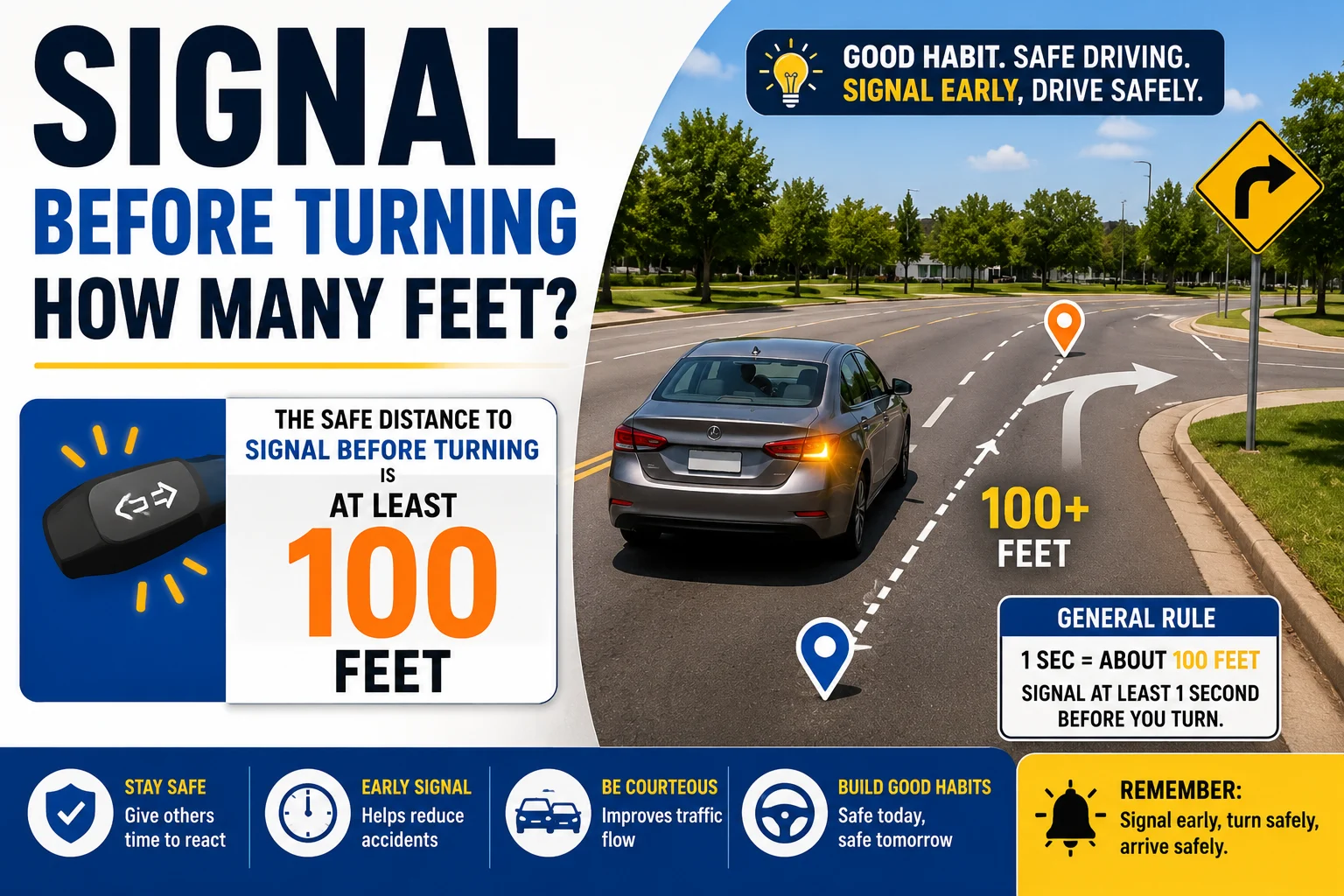
In most U.S. states, drivers are required to signal continuously for at least 100 feet before making a turn. This gives other drivers, cyclists, and pedestrians enough time to react safely.
Although 100 feet is the standard rule in many states, some locations have slightly different requirements. That’s why it’s always a good idea to review your state’s driver’s handbook.
Quick Answer
Most U.S. states require you to signal at least 100 feet before turning.
This means you should activate your turn signal well before reaching the intersection, driveway, or entrance where you intend to turn.
Quick Reference
| Driving Action | Recommended Signal Distance |
|---|---|
| Right Turn | At least 100 feet before turning |
| Left Turn | At least 100 feet before turning |
| Entering a Driveway | At least 100 feet beforehand |
| Exiting a Parking Lot | Signal before entering traffic |
| Lane Change | Signal for several seconds before moving |
Why Signaling Before Turning Is Important
Turn signals are one of the simplest yet most effective safety features on a vehicle. They communicate your intentions to everyone around you.
Improves Safety
By signaling early, you give nearby drivers time to slow down, change lanes, or prepare for your turn. This reduces sudden braking and confusion.
Prevents Accidents
Many rear-end and side-impact crashes occur because drivers turn without warning. A properly timed signal helps reduce these risks.
Required by Law
Traffic laws in most states require drivers to signal before turning or changing lanes. Failing to do so can result in a traffic citation or points on your driving record.
Standard U.S. Rule for Turn Signals
The most commonly taught rule is:
Signal continuously for at least 100 feet before making your turn.
For reference:
- 100 feet is about the length of 6–7 average passenger cars parked bumper to bumper.
- At 30 mph, you’ll travel 100 feet in about 2–3 seconds.
- At higher speeds, it’s best to signal even earlier to give others more reaction time.
Following the 100-foot rule helps ensure your intentions are clear to other road users.
Do Signal Distances Vary by State?
Yes. While 100 feet is the standard in many U.S. states, traffic laws can vary.
Some states require:
- A minimum of 100 feet before turning.
- Longer signaling distances on highways or higher-speed roads.
- Continuous signaling until the turn is completed.
If you’re preparing for a driver’s license exam, always review your state’s driver’s manual to confirm the exact requirement.
How to Signal Properly Before Turning
Using your turn signal correctly involves more than simply flipping the lever.
Step 1: Check Your Mirrors
Before signaling, check your rearview and side mirrors to understand surrounding traffic.
Step 2: Activate the Signal
Turn on your left or right indicator at least 100 feet before your turn.
Step 3: Check Blind Spots
Look over your shoulder to make sure the lane or turning path is clear.
Step 4: Slow Down Gradually
Reduce your speed smoothly while keeping the signal on.
Step 5: Complete the Turn
Finish the turn safely and allow the signal to cancel automatically or turn it off manually if needed.
Signaling for Lane Changes vs. Turns
Turning and changing lanes require different timing.
| Driving Action | Recommended Practice |
|---|---|
| Turning at an intersection | Signal at least 100 feet before the turn |
| Changing lanes | Signal for several seconds before moving |
| Entering traffic | Signal before pulling out |
| Exiting a highway | Signal well before the exit ramp |
For lane changes, avoid signaling and moving immediately. Give surrounding drivers enough time to notice your intentions.
Common Driving Situations
Residential Streets
Even on quiet neighborhood roads, signal at least 100 feet before turning whenever practical.
Highways
Because vehicles travel at higher speeds, signaling earlier than 100 feet is often safer.
Parking Lots
Although parking lots are private property in many cases, using your turn signal helps pedestrians and other drivers anticipate your movements.
Roundabouts
Signal when exiting the roundabout to indicate which exit you’re taking.
Common Mistakes Drivers Make
Many drivers develop poor signaling habits over time. Avoid these common mistakes:
- Turning on the signal too late.
- Forgetting to signal at all.
- Leaving the signal on after completing a turn.
- Signaling while already turning.
- Assuming no one is nearby, so signaling isn’t necessary.
- Failing to signal before changing lanes.
Consistent signaling helps make traffic more predictable and safer for everyone.
Expert Safe Driving Tips
Professional driving instructors recommend these habits:
- Signal early, not at the last second.
- Keep both hands on the steering wheel whenever possible.
- Check mirrors before and after signaling.
- Always check your blind spot before turning or changing lanes.
- Maintain a safe following distance to give yourself time to react.
- Never rely solely on your turn signal—make sure the way is clear before turning.
Developing these habits not only improves safety but also helps you pass a driving test with confidence.
When Should You Signal Earlier Than 100 Feet?
Although 100 feet is the minimum requirement in many places, there are situations where signaling earlier is beneficial:
- Heavy traffic
- High-speed roads
- Busy intersections
- Poor weather conditions
- Limited visibility due to hills or curves
Providing extra notice gives other road users more time to respond safely.
FAQs
1. How many feet before turning should you signal?
In most U.S. states, you should signal at least 100 feet before making a turn.
2. Is the 100-foot rule the same in every state?
No. While many states use the 100-foot rule, some have different requirements. Always check your state’s driver’s handbook.
3. Should I signal before changing lanes?
Yes. Signal several seconds before moving into another lane, and check your mirrors and blind spots first.
4. Can I get a ticket for not signaling?
Yes. Failing to signal when required can result in a traffic citation, fines, or points on your driving record, depending on your state’s laws.
5. Why is signaling important even when no cars are nearby?
You may not see pedestrians, cyclists, or vehicles approaching from blind spots. Signaling consistently is a good driving habit that improves overall road safety.
Conclusion
Knowing signal before turning how many feet is an essential part of safe and responsible driving. In most U.S. states, the recommended and legally required distance is at least 100 feet before making a turn. Signaling early gives other drivers, cyclists, and pedestrians enough time to understand your intentions and react safely.
Whether you’re preparing for a driving test or simply improving your driving habits, remember to signal before every turn, check your mirrors and blind spots, and complete the maneuver smoothly. Following these simple steps helps reduce accidents, improves traffic flow, and makes the road safer for everyone.