
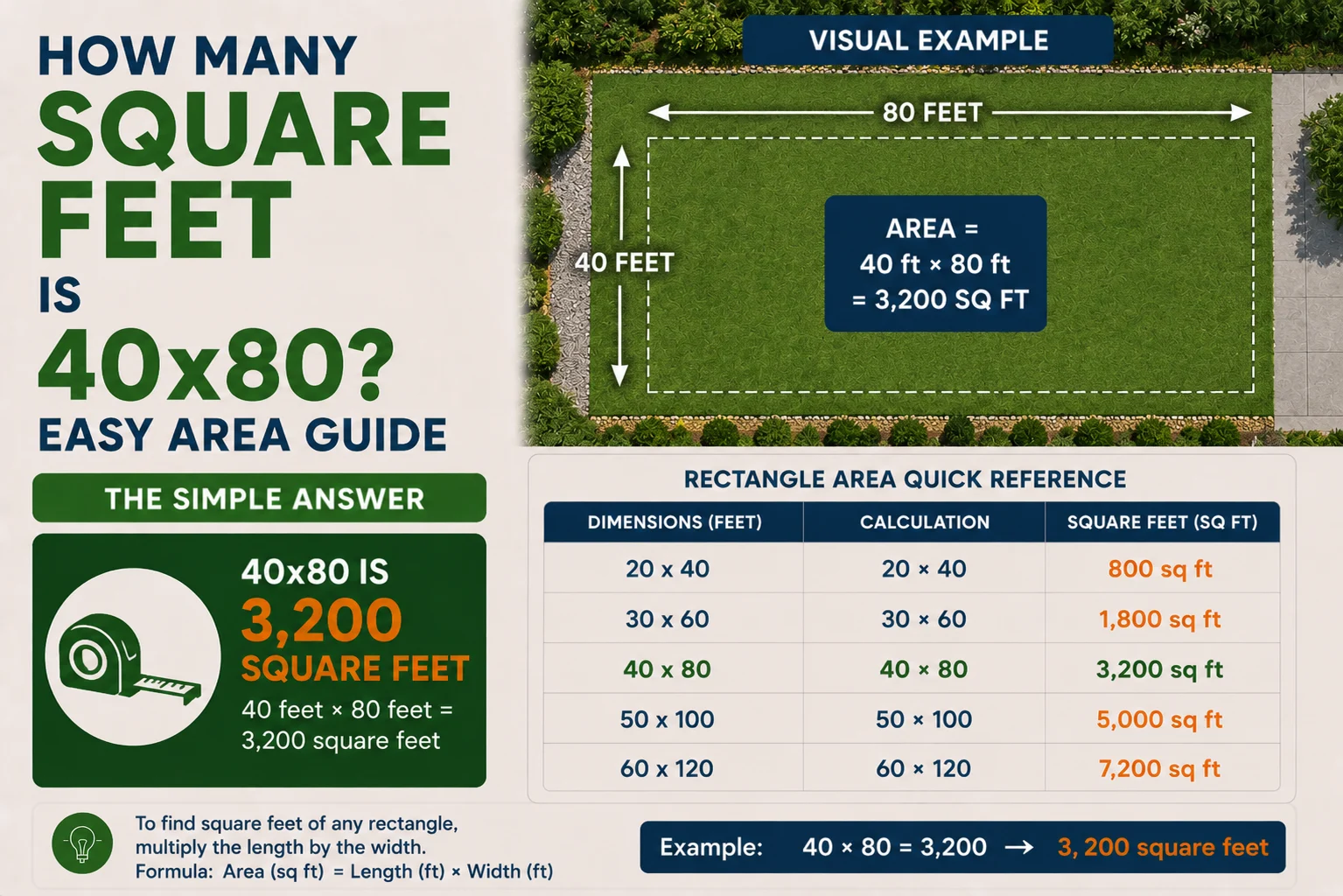
If you are asking how many square feet is 40×80, the answer is simple and exact:
A space that measures 40 feet by 80 feet equals 3,200 square feet.
This is a common building size used for shops, warehouses, garages, barns, and large residential structures. Understanding the square footage helps with planning construction, estimating materials, and comparing property sizes.
In this guide, you will learn how to calculate it, what 3,200 square feet looks like in real life, and how this size is commonly used.
The Exact Answer: 40×80 Equals 3,200 Square Feet
To find square footage, you multiply length by width.
40×80=3200 square feet
So, how many square feet is 40×80?
👉 The answer is 3,200 square feet
How to Calculate 40×80 in Square Feet
The formula for area is:
Area=Length×Width
For a 40×80 space:
- Length = 80 feet
- Width = 40 feet
- Area = 3,200 square feet
This formula works for any rectangular space.
Why a 40×80 Space Is Popular
A 40×80 structure is widely used because it offers:
- Large open floor space
- Flexible interior layout
- Cost-effective construction ratio
- Easy modular framing
- Good balance between size and usability
It is especially popular for:
- Workshops
- Metal buildings
- Storage facilities
- Agricultural barns
What Can Fit in a 40×80 Space
A 3,200-square-foot area can hold a lot of functional space.
Residential Use
- Large open-concept home
- Multiple bedrooms and living areas
- Garage + workshop combination
Commercial Use
- Small warehouse
- Auto repair shop
- Retail storage space
Agricultural Use
- Equipment storage
- Livestock shelter
- Feed storage
Real-World Uses of 40×80 Buildings
Workshop or Garage
A common use is a multi-vehicle garage with:
- Parking for 6–10 vehicles
- Tool storage area
- Workbenches and equipment zones
Warehouse Storage
A 40×80 warehouse can store:
- Pallets of goods
- Industrial equipment
- Inventory for small businesses
Event or Community Space
Some 40×80 structures are used for:
- Community halls
- Indoor training spaces
- Recreational facilities
Comparison with Other Building Sizes
| Dimensions | Square Feet | Use Case |
|---|---|---|
| 20×20 | 400 sq ft | Small garage |
| 30×40 | 1,200 sq ft | Medium workshop |
| 40×60 | 2,400 sq ft | Large barn |
| 40×80 | 3,200 sq ft | Warehouse/workshop |
| 50×100 | 5,000 sq ft | Commercial building |
A 40×80 structure is considered large and highly versatile.
Cost and Planning Considerations
The total cost of a 40×80 building depends on:
- Foundation type
- Material (wood vs steel)
- Interior finishing
- Insulation and utilities
- Local labor rates
Important Planning Tips
- Always confirm zoning regulations
- Plan electrical and plumbing early
- Consider insulation for climate control
- Allow space for future expansion
Common Mistakes When Calculating Area
Forgetting to Multiply Correctly
Some people add 40 + 80 instead of multiplying.
Confusing Square Feet with Linear Feet
Linear feet measure length only.
Ignoring Usable Space
Walls, storage, and structural elements reduce usable interior area.
Not Considering Ceiling Height
Square feet do not reflect volume.
Expert Tips
- Sketch a floor plan before building
- Divide space into functional zones
- Use modular furniture for flexibility
- Leave room for walkways and access points
- Compare multiple building layouts before deciding
9. Frequently Asked Questions
1. How many square feet is 40×80?
A 40×80 space equals 3,200 square feet.
2. Is 40×80 a large building?
Yes, it is considered a large and versatile structure.
3. What can you build with 3,200 square feet?
Homes, warehouses, workshops, and commercial spaces.
4. How do you calculate square feet?
Multiply length by width.
5. Is 40×80 good for a shop or garage?
Yes, it is ideal for large workshops and multi-use garages.
10. Conclusion
So, how many square feet is 40×80? The answer is clear: 3,200 square feet.
This size is widely used in construction because it provides a large, flexible space suitable for residential, commercial, and industrial purposes. Whether you are planning a workshop, warehouse, or large garage, understanding that 40×80 equals 3,200 square feet helps you make smarter building and budgeting decisions.