

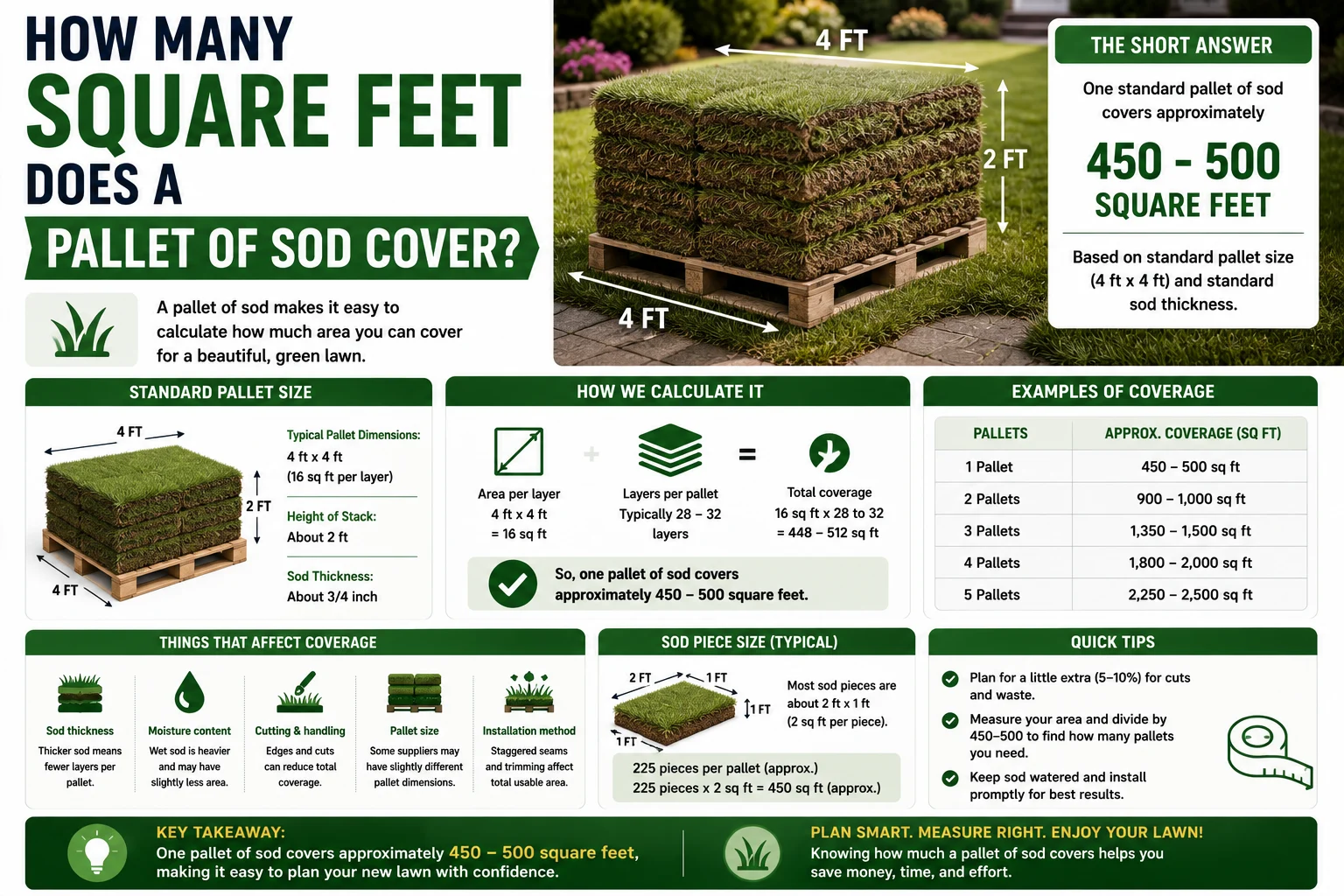
If you’re planning a new lawn or replacing damaged grass, one of the first questions you’ll probably ask is how many square feet pallet of sod covers. Ordering the right amount is important because buying too little can delay your project, while buying too much increases costs and may leave unused sod that quickly dries out.
In most cases, a standard pallet of sod covers between 400 and 500 square feet, with 450 square feet being the most common estimate used by homeowners and landscapers. However, coverage can vary depending on the type of grass, the size of each sod piece, and the supplier.
This guide explains standard pallet sizes, coverage charts, lawn measurement methods, and practical examples so you can confidently estimate how much sod you need.
Quick Answer
A standard pallet of sod typically covers:
| Pallet Type | Coverage |
|---|---|
| Small Pallet | 400 sq ft |
| Standard Pallet | 450 sq ft |
| Large Pallet | 500 sq ft |
For planning purposes, most suppliers recommend assuming 450 square feet per pallet unless your local sod farm specifies otherwise.
Standard Pallet of Sod Coverage Chart
Sod is usually sold by the pallet, making it easier to transport and install over larger areas.
| Pallet Type | Approximate Coverage | Typical Use |
|---|---|---|
| Small Pallet | 400 sq ft | Small residential lawns |
| Standard Pallet | 450 sq ft | Average home projects |
| Large Pallet | 500 sq ft | Large landscaping jobs |
Coverage varies because different growers cut sod into slightly different slab or roll sizes.
Small Pallets
Small pallets generally cover about 400 square feet and are ideal for:
- Lawn repairs
- Small front yards
- Garden renovations
- Patching damaged grass
Standard Pallets
The most common pallet size covers approximately 450 square feet.
This size works well for:
- New home lawns
- Backyard renovations
- Residential landscaping
- Medium-sized yards
Large Pallets
Some commercial suppliers package larger pallets that cover up to 500 square feet.
These are commonly used for:
- Parks
- Sports fields
- Commercial properties
- Large residential projects
Standard Sod Piece Sizes
The number of sod pieces on a pallet depends on the size of each piece.
| Sod Piece Size | Pieces per Pallet | Total Coverage |
|---|---|---|
| 16 × 24 inches | 150 | 400 sq ft |
| 16 × 24 inches | 165 | 440 sq ft |
| 16 × 24 inches | 180 | 480 sq ft |
| Large Rolls | Varies | 400–500 sq ft |
Always verify the exact dimensions with your supplier before ordering.
How Many Pallets of Sod Do You Need?
Estimating the number of pallets required is straightforward.
Step 1 – Measure Your Lawn
Measure the length and width of each section of your lawn in feet.
For irregularly shaped lawns, divide the area into smaller rectangles and calculate each section separately.
Step 2 – Calculate Square Footage
Use this formula:
Length × Width = Square Feet
Example:
40 ft × 30 ft = 1,200 square feet
Step 3 – Divide by Pallet Coverage
If one pallet covers 450 square feet:
1,200 ÷ 450 = 2.67 pallets
Since you can’t purchase a fraction of a pallet, round up to 3 pallets.
Sod Coverage Chart by Lawn Size
Use this chart for quick estimates.
| Lawn Size | Pallets Needed |
|---|---|
| 400 sq ft | 1 |
| 500 sq ft | 2 |
| 900 sq ft | 2 |
| 1,000 sq ft | 3 |
| 1,500 sq ft | 4 |
| 2,000 sq ft | 5 |
| 3,000 sq ft | 7 |
| 5,000 sq ft | 11–12 |
| 10,000 sq ft | 22–25 |
These estimates assume a pallet covers approximately 450 square feet.
Factors That Affect Sod Coverage
Several factors influence how much area a pallet can cover.
Sod Piece Size
Larger slabs reduce installation time, while smaller pieces allow for easier placement around curves and landscaping.
Grass Variety
Different grass types may be cut at slightly different sizes depending on the farm.
Supplier Packaging
Some suppliers bundle more pieces per pallet than others, resulting in different coverage totals.
Waste During Installation
Cutting sod around:
- Trees
- Flower beds
- Walkways
- Curved borders
can create leftover scraps, increasing the amount you’ll need.
Types of Sod and Their Coverage
Most grass varieties have similar pallet coverage, but the grass type can affect thickness and packaging.
Common sod varieties include:
- Kentucky Bluegrass
- Bermuda Grass
- Zoysia Grass
- Tall Fescue
- St. Augustine Grass
- Centipede Grass
Regardless of variety, most pallets still cover between 400 and 500 square feet.
Expert Tips Before Ordering Sod
Follow these best practices to ensure a successful lawn installation.
- Measure your lawn twice before placing an order.
- Add 5–10% extra sod for trimming and waste.
- Install sod immediately after delivery.
- Water the sod thoroughly after installation.
- Prepare the soil by removing weeds and leveling the surface.
- Order all sod from the same supplier to maintain consistent color and texture.
- Schedule delivery close to your installation date.
Common Mistakes to Avoid
Avoid these common errors when calculating sod requirements.
Ordering Exactly the Required Amount
Unexpected trimming often creates waste.
Forgetting Irregular Areas
Measure around patios, sidewalks, trees, and landscaping features separately.
Ignoring Supplier Coverage
Not every supplier sells pallets with the same square footage.
Measuring Incorrectly
Double-check all dimensions before ordering.
Delaying Installation
Fresh sod should be installed as soon as possible to prevent drying and damage.
FAQs
1. How many square feet does one pallet of sod cover?
A standard pallet of sod covers 400 to 500 square feet, with 450 square feet being the most common average.
2. How many pallets of sod do I need for a 1,000-square-foot lawn?
Most homeowners will need 3 pallets, assuming each pallet covers approximately 450 square feet.
3. Should I order extra sod?
Yes. It’s recommended to order 5–10% extra to account for trimming, waste, and future repairs.
4. Does every sod pallet cover the same amount?
No. Coverage varies depending on the supplier, grass variety, and sod piece size.
5. How do I calculate the amount of sod I need?
Measure your lawn’s length and width, calculate the total square footage, then divide by the coverage provided by one pallet. Always round up to the next whole pallet.
Conclusion
Knowing how many square feet pallet of sod covers helps you order the right amount for your lawn project while avoiding unnecessary costs and delays. Although coverage varies slightly by supplier, most pallets provide between 400 and 500 square feet, with 450 square feet serving as the standard estimate.
Before purchasing, measure your lawn carefully, confirm your supplier’s pallet coverage, and order an additional 5–10% to account for trimming and installation waste. With accurate measurements and proper planning, you’ll have everything you need to create a healthy, beautiful lawn with minimal hassle.