

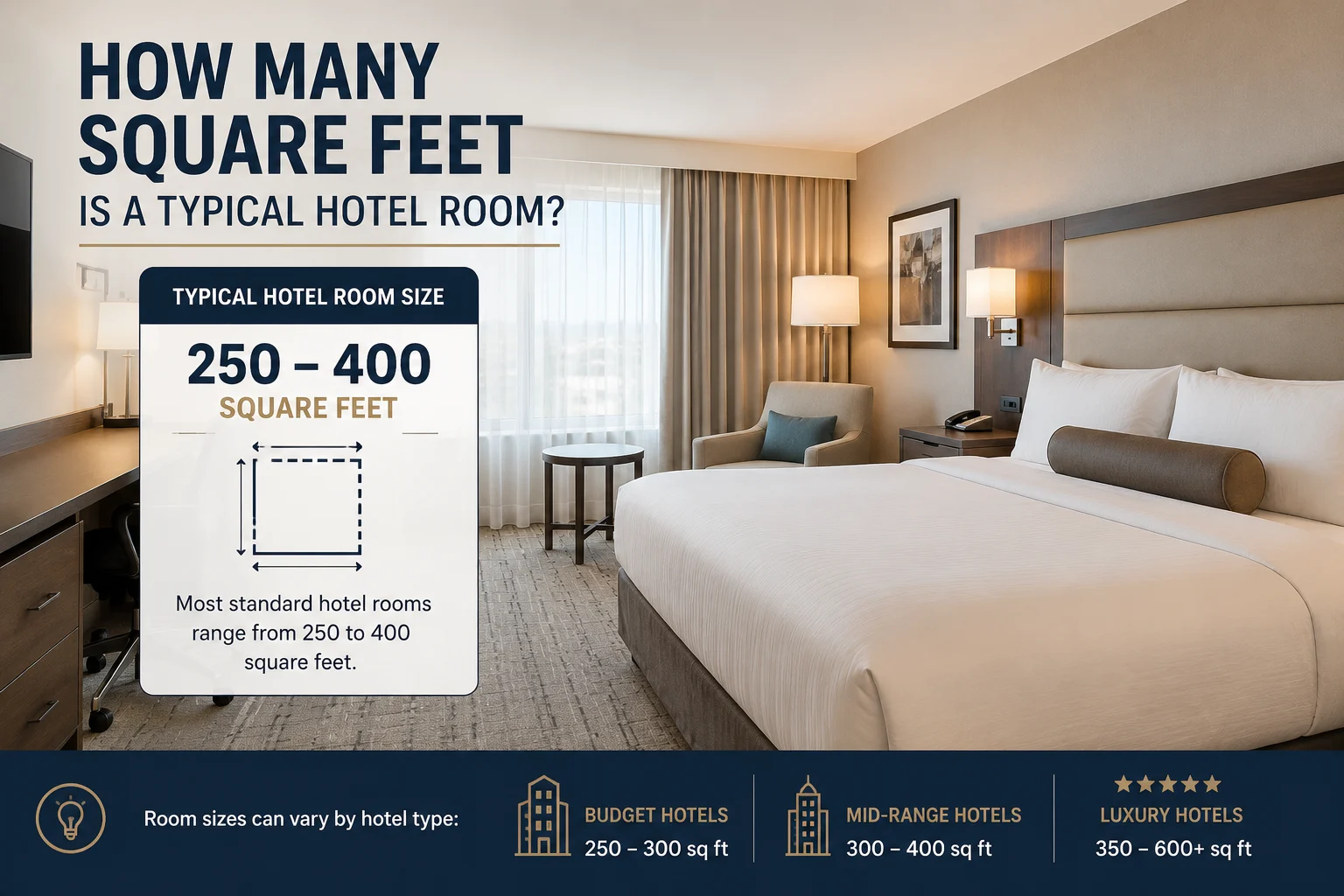
When booking a hotel, one question many travelers ask is: how many square feet is a typical hotel room? The answer depends on the hotel category, location, and room type. However, most standard hotel rooms fall between 300 and 400 square feet.
That size usually includes the sleeping area, bathroom, closet space, and small walking areas. Luxury hotels often provide much larger rooms, while budget hotels may offer compact spaces designed mainly for short stays.
Understanding hotel room sizes can help you choose the right accommodation for comfort, budget, and travel needs. Whether you are planning a business trip, family vacation, or weekend getaway, knowing average hotel room square footage helps avoid surprises after check-in.
What Is the Average Size of a Hotel Room?
The average hotel room in the United States is typically around 325 square feet. However, room sizes vary widely depending on the hotel’s rating and purpose.
Here is a general breakdown:
| Hotel Type | Average Room Size |
|---|---|
| Budget Hotel | 200–300 sq ft |
| Mid Range Hotel | 300–400 sq ft |
| Luxury Hotel | 400–600 sq ft |
| Hotel Suite | 600–1,500+ sq ft |
A standard room in a three-star hotel often includes:
- One king or two queen beds
- A private bathroom
- Desk or seating area
- Television
- Closet or luggage space
Some compact urban hotels may offer rooms under 200 square feet, especially in large cities where space is expensive.
Typical Hotel Room Sizes by Hotel Type
Budget Hotels
Budget hotels focus on affordability and efficiency. Rooms are usually smaller but functional.
Typical size:
- 200–300 square feet
These rooms generally include:
- Basic bed setup
- Compact bathroom
- Limited storage
- Minimal seating
Budget accommodations are ideal for:
- Solo travelers
- Overnight stays
- Quick business trips
Because the rooms are smaller, furniture is often designed to save space.
Mid Range Hotels
Mid range hotels provide a balance between comfort and affordability.
Typical size:
- 300–400 square feet
These rooms commonly feature:
- Larger beds
- Workspace or desk
- Extra seating
- Better bathroom layouts
This category includes many popular hotel chains used by families and business travelers.
Luxury Hotels
Luxury hotels prioritize spaciousness and premium comfort.
Typical size:
- 400–600 square feet or more
Luxury rooms may include:
- Separate sitting areas
- Large bathrooms
- Walk-in closets
- Premium furnishings
- Scenic balconies
Five-star hotels often exceed average room sizes significantly.
Extended Stay Hotels
Extended stay hotels are designed for guests staying multiple days or weeks.
Typical size:
- 350–500 square feet
Many include:
- Kitchenettes
- Dining areas
- Larger closets
- Workstations
These rooms feel more like small apartments than traditional hotel rooms.
Standard Hotel Room Dimensions Explained
Many people wonder how square footage translates into actual room dimensions.
A standard hotel room measuring 325 square feet may have dimensions close to:
18 ft×18 ft≈324 square feet
Of course, hotel rooms are rarely perfect squares. Layouts vary depending on:
- Bathroom placement
- Hallways
- Furniture arrangement
- Windows and balconies
For example:
- A narrow city hotel room might measure 12 × 25 feet
- A resort room may be wider with open seating areas
The usable space often matters more than the total square footage.
Hotel Room Size Comparison Table
Below is a quick comparison of common hotel room sizes.
| Room Type | Typical Square Footage | Best For |
|---|---|---|
| Economy Room | 180–250 sq ft | Solo travelers |
| Standard Room | 300–350 sq ft | Couples |
| Deluxe Room | 350–500 sq ft | Families |
| Junior Suite | 500–700 sq ft | Extended stays |
| Luxury Suite | 800–1,500+ sq ft | Premium travel |
This table shows why understanding room size is important before booking.
How Hotel Room Size Changes Around the World
Hotel room dimensions differ greatly by country and region.
United States
Hotels in the United States tend to have larger rooms than many other countries.
Average size:
- 300–400 square feet
American hotels often prioritize:
- Larger beds
- Bigger bathrooms
- Spacious layouts
Resort destinations may offer even larger accommodations.
Europe
European hotel rooms are often smaller due to older buildings and limited urban space.
Average size:
- 170–300 square feet
In cities like Paris or London, compact rooms are very common.
However, many European hotels make excellent use of available space through efficient furniture design.
Asia
Asian hotel room sizes vary dramatically.
Examples:
- Budget city hotels: 150–250 sq ft
- Luxury resorts: 500+ sq ft
Major cities like Tokyo and Hong Kong are known for very small hotel rooms because of expensive real estate.
Meanwhile, tropical resort destinations may provide oversized villas and suites.
What Is Included in Hotel Room Square Footage?
When hotels advertise room size, the square footage usually includes:
- Sleeping area
- Bathroom
- Entryway
- Small closets
- Interior walking space
However, some areas may not count:
- Outdoor balconies
- Shared hallways
- Common lounge access
Always check hotel descriptions carefully because measurement standards vary between brands.
Why Hotel Room Size Matters
Room size affects much more than comfort.
Comfort and Relaxation
Larger rooms provide:
- More walking space
- Better furniture layouts
- Reduced clutter
This becomes especially important during longer stays.
Family Travel
Families often need:
- Space for luggage
- Extra beds
- Seating areas
- Room for children to move around
A room that feels fine for two adults may feel cramped for four guests.
Business Travel
Business travelers benefit from:
- Work desks
- Quiet seating areas
- Better organization space
Compact rooms can make remote work difficult.
Accessibility Needs
Travelers using wheelchairs or mobility devices need larger layouts for easier movement.
Accessible rooms are often significantly larger than standard rooms.
Common Hotel Room Types and Their Sizes
Single Rooms
Single rooms are designed for one guest.
Typical size:
- 150–250 square feet
These are common in budget hotels and urban locations.
Double Rooms
Double rooms usually contain two beds.
Typical size:
- 300–400 square feet
These rooms are popular among families and groups.
King Rooms
King rooms include one king-sized bed and often more open floor space.
Typical size:
- 300–450 square feet
Many business hotels favor king room layouts.
Suites
Suites offer separate living and sleeping spaces.
Typical size:
- 600–1,500+ square feet
Luxury suites may include:
- Dining rooms
- Kitchens
- Multiple bathrooms
- Office areas
Some presidential suites exceed the size of small homes.
Tips for Choosing the Right Hotel Room Size
Knowing how many square feet a typical hotel room is can help you book smarter.
Read the Room Details Carefully
Many hotel websites list exact room dimensions.
Look for:
- Square footage
- Bed sizes
- Floor plans
- Seating arrangements
Check Guest Photos
Real guest photos often reveal room size more accurately than professional marketing images.
Wide-angle lenses can make small rooms appear much larger online.
Consider Your Length of Stay
A compact room may work fine for:
- One-night stays
- Business travel
- Solo trips
Long vacations often require larger accommodations for comfort.
Think About Luggage
Travelers with:
- Large suitcases
- Sports equipment
- Baby gear
need extra floor space to avoid overcrowding.
Common Mistakes Travelers Make
Ignoring Square Footage
Many travelers focus only on price and photos.
However, room size can strongly affect overall satisfaction.
Assuming All Standard Rooms Are Equal
A “standard room” varies greatly between hotels.
One hotel’s standard room may be 220 square feet, while another’s is 400 square feet.
Forgetting Bathroom Size
Small bathrooms can make rooms feel cramped, even if the total square footage seems reasonable.
Overlooking Layout Efficiency
A well-designed 250-square-foot room can sometimes feel larger than a poorly designed 350-square-foot room.
Furniture placement matters.
Expert Tips for Booking the Best Room
Travel experts often recommend:
- Booking corner rooms for extra space
- Choosing newer hotels with modern layouts
- Looking for suites during off-season discounts
- Comparing square footage before booking
Some travelers even prioritize room size over hotel amenities because comfort impacts the entire stay experience.
9. FAQs
How many square feet is a normal hotel room?
A normal hotel room is usually between 300 and 400 square feet, depending on the hotel category and location.
What is considered a large hotel room?
A hotel room over 500 square feet is generally considered large. Suites and luxury rooms may exceed 1,000 square feet.
Are hotel rooms smaller in big cities?
Yes. Hotels in major cities often have smaller rooms because of higher real estate costs and limited space.
Does hotel room square footage include the bathroom?
In most cases, yes. The listed square footage usually includes the bathroom and interior entry space.
What size is a hotel suite?
Hotel suites commonly range from 600 to 1,500 square feet or more, depending on the hotel’s luxury level.
10. Conclusion
So, how many square feet is a typical hotel room? In most cases, the answer falls between 300 and 400 square feet for standard accommodations. Budget hotels may offer smaller spaces around 200 square feet, while luxury hotels and suites can provide over 1,000 square feet of comfort.
Understanding average hotel room size helps travelers make better booking decisions. Room dimensions affect comfort, convenience, storage, and overall travel satisfaction. Before reserving your next stay, compare square footage, room layouts, and amenities carefully to ensure the space matches your needs.