

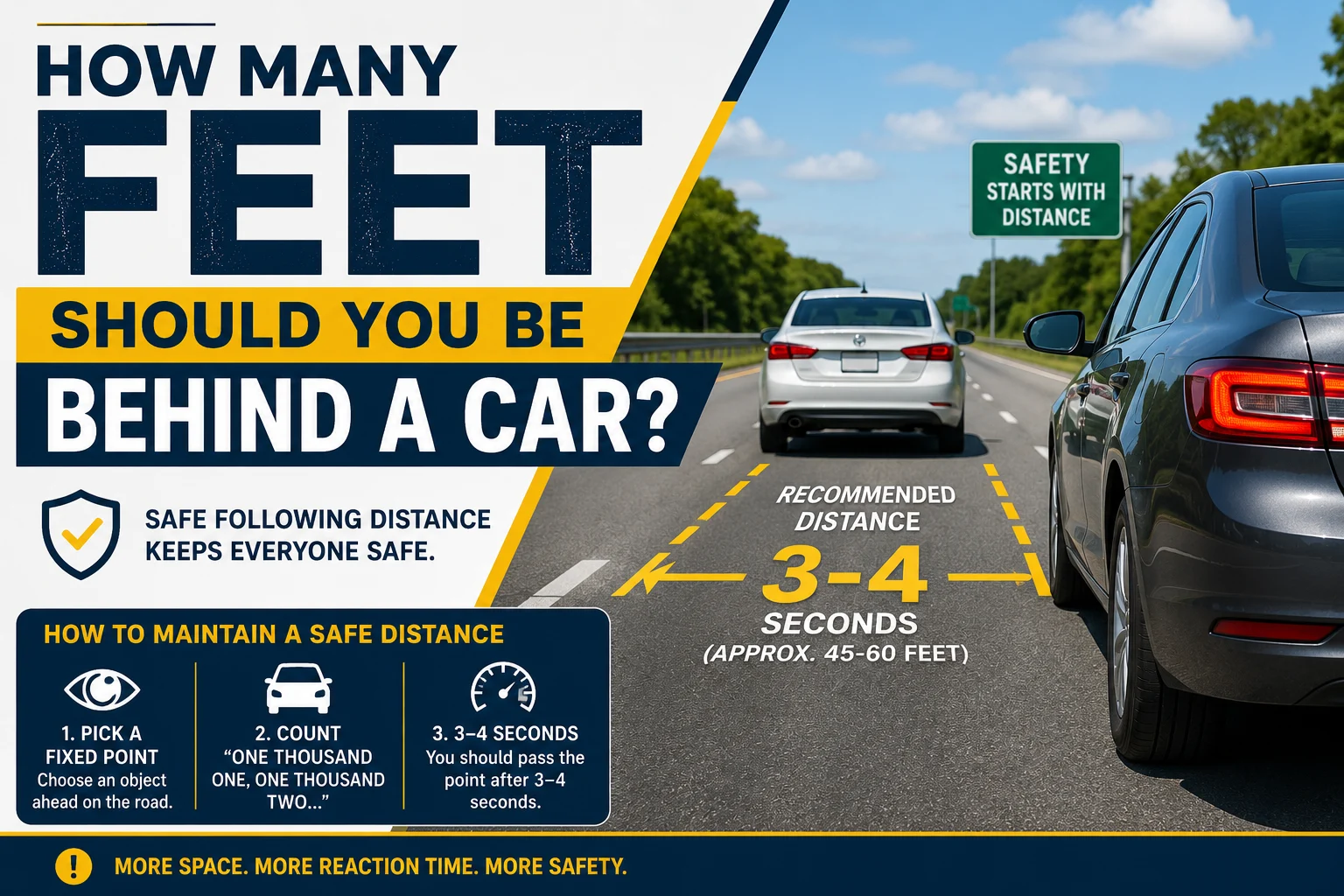
Maintaining a safe following distance is one of the most important habits for preventing rear-end collisions. Whether you’re driving in city traffic, on highways, or during bad weather, leaving enough space between your vehicle and the one ahead gives you more time to react to sudden stops or unexpected hazards.
A common question is:
How many feet should you be behind a car?
The answer depends on your speed. Instead of using a fixed number of feet, driving experts recommend using the 3-second rule because the safe distance increases as your speed increases.
As a general guideline:
- At 30 mph: about 130 feet
- At 40 mph: about 176 feet
- At 50 mph: about 220 feet
- At 60 mph: about 264 feet
- At 70 mph: about 308 feet
In this guide, you’ll learn how to determine a safe following distance, why the 3-second rule works, recommended distances at different speeds, and tips for driving safely in various conditions.
How Many Feet Should You Be Behind a Car?
There is no single number of feet that is always safe.
Your following distance depends on:
- Your speed
- Road conditions
- Weather
- Traffic
- Vehicle type
For most driving situations, experts recommend staying at least 3 seconds behind the vehicle in front.
The 3-Second Rule
The easiest way to measure a safe following distance is the 3-second rule.
How It Works
- Pick a fixed object beside the road, such as a sign or utility pole.
- Watch the vehicle ahead pass that object.
- Count:
- “One thousand one”
- “One thousand two”
- “One thousand three”
- Your vehicle should not reach the same object until you finish counting.
If you arrive sooner, you’re following too closely.
Safe Following Distance in Feet
The approximate distance covered in 3 seconds at different speeds is:
| Speed | Approximate Safe Distance |
|---|---|
| 20 mph | 88 feet |
| 30 mph | 132 feet |
| 40 mph | 176 feet |
| 50 mph | 220 feet |
| 60 mph | 264 feet |
| 70 mph | 308 feet |
These values are estimates and assume normal road and weather conditions.
Why the 3-Second Rule Is Better Than a Fixed Distance
Many people ask whether they should stay 50 feet or 100 feet behind another car.
The problem is that the safe distance changes with speed.
For example:
- 100 feet may be enough at low speeds.
- At highway speeds, 100 feet is usually too close.
The 3-second rule automatically adjusts your following distance based on how fast you’re traveling.
Increase Your Distance in Bad Conditions
Three seconds is the minimum for ideal conditions.
Increase your following distance to:
Four Seconds
Use when:
- Driving at night
- Heavy traffic
- Towing a trailer
Five to Six Seconds
Use when:
- Rain
- Snow
- Ice
- Fog
- Poor visibility
Extra distance gives you more time to react if traction is reduced.
Why Following Distance Matters
Keeping enough space behind another vehicle helps you:
- Avoid rear-end collisions
- React to sudden braking
- See hazards sooner
- Reduce stress while driving
- Improve overall road safety
It also gives drivers behind you more room to react.
Average Stopping Distance
Stopping distance includes:
- Reaction distance (how far you travel before braking)
- Braking distance (how far the vehicle travels after braking)
At 60 mph, the total stopping distance can exceed 300 feet, depending on vehicle condition, road surface, and driver reaction time.
This is one reason maintaining a proper following distance is so important.
When Should You Leave More Space?
Increase your following distance when:
Driving Behind Large Trucks
Large trucks block your view and require longer stopping distances.
Heavy Rain
Wet roads reduce tire grip and increase braking distance.
Snow or Ice
Traction decreases significantly, making longer following distances essential.
Night Driving
Reduced visibility makes it harder to spot hazards early.
Towing a Trailer
Additional weight increases stopping distance.
Common Mistakes Drivers Make
Tailgating
Following too closely leaves little time to react and is a major cause of rear-end crashes.
Using a Fixed Number of Feet
Safe distance changes with speed, so a single measurement isn’t always appropriate.
Ignoring Weather
Rain, snow, and fog all require greater following distances.
Distracted Driving
Looking at a phone or adjusting controls reduces reaction time and increases risk.
Tips for Maintaining a Safe Following Distance
- Use the 3-second rule in normal conditions.
- Increase to 4–6 seconds in poor weather.
- Stay alert and avoid distractions.
- Watch traffic several vehicles ahead when possible.
- Slow down if visibility is reduced.
- Avoid aggressive driving and tailgating.
Frequently Asked Questions
How many feet should you stay behind a car?
It depends on your speed. Instead of a fixed number of feet, use the 3-second rule, which typically equals:
- About 132 feet at 30 mph
- About 264 feet at 60 mph
What is the 3-second rule?
It means your vehicle should pass a fixed roadside object at least three seconds after the vehicle in front passes it.
Is 100 feet enough?
At lower speeds, it may be. At highway speeds, 100 feet is generally too short for safe stopping.
Should I leave more space in rain?
Yes. Increase your following distance to at least 4–6 seconds on wet or slippery roads.
Why is tailgating dangerous?
Tailgating reduces your reaction time and greatly increases the risk of rear-end collisions.
Does speed affect following distance?
Yes. The faster you drive, the more distance you need to stop safely.
Safe Following Distance Chart
| Speed | Minimum Following Distance |
|---|---|
| 20 mph | 88 feet |
| 30 mph | 132 feet |
| 40 mph | 176 feet |
| 50 mph | 220 feet |
| 60 mph | 264 feet |
| 70 mph | 308 feet |
Conclusion
The answer to “How many feet should you be behind a car?” depends on how fast you’re traveling.
Rather than using a fixed number of feet, the safest approach is to follow the 3-second rule, which automatically adjusts your following distance as your speed changes.
Quick Reference
- 30 mph: ~132 feet
- 40 mph: ~176 feet
- 50 mph: ~220 feet
- 60 mph: ~264 feet
- 70 mph: ~308 feet
- Increase to 4–6 seconds in rain, snow, fog, or other hazardous conditions.
By maintaining a proper following distance, you give yourself more time to react, reduce the likelihood of rear-end collisions, and make driving safer for everyone on the road.
Discover More Articles
How Many Square Feet Is an 8×10 Area Rug? Complete Size Guide