

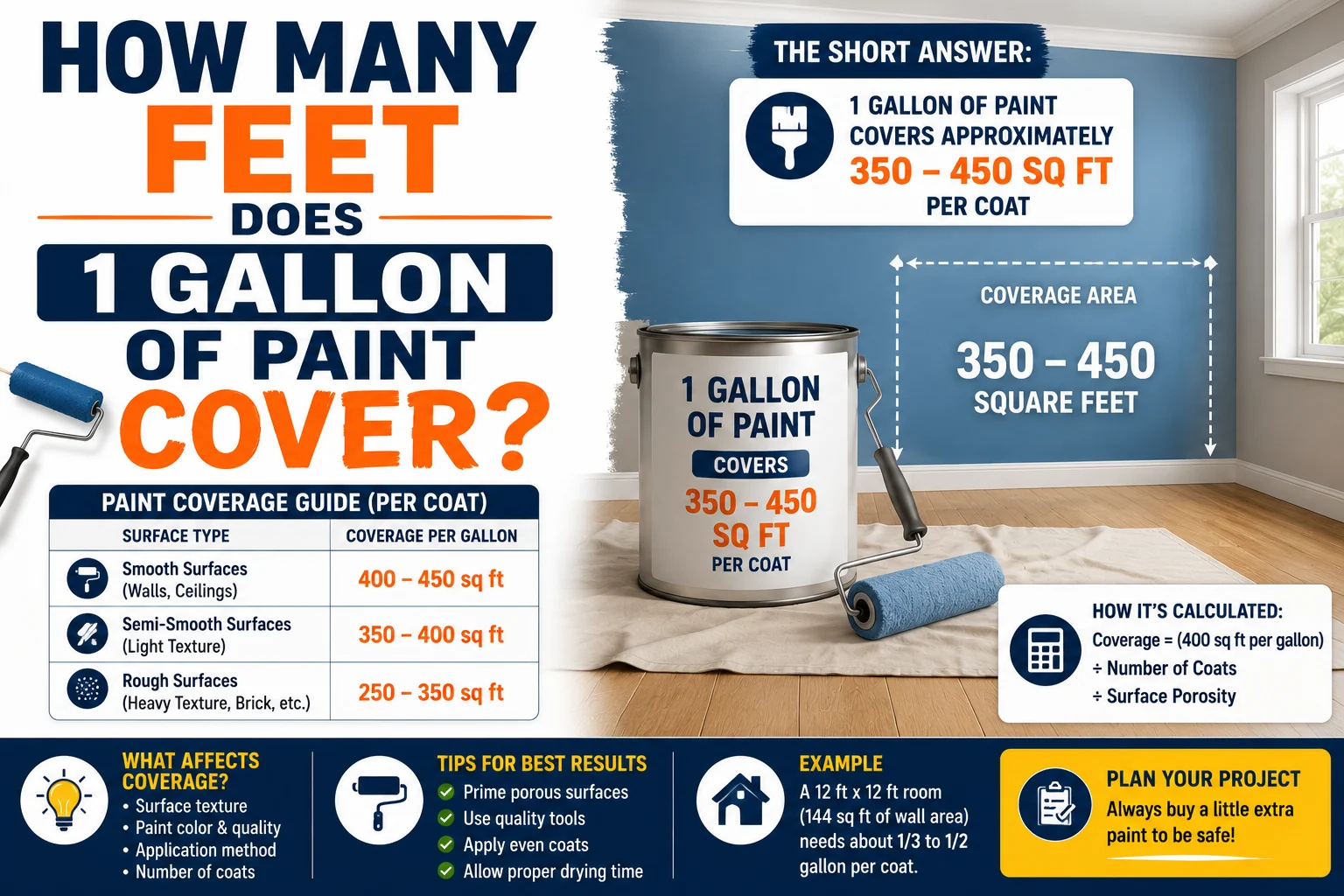
If you’re planning to paint a room, house, fence, or another surface, one of the first questions you’ll ask is how many feet does 1 gallon of paint cover. Knowing the answer helps you buy the right amount of paint, avoid unnecessary trips to the store, and reduce waste.
In general, 1 gallon of paint covers approximately 350 to 400 square feet with one coat on a smooth, properly prepared surface. However, the exact coverage depends on several factors, including the type of paint, surface texture, application method, and whether you’re applying one or two coats.
This guide explains paint coverage in detail, provides easy calculation formulas, and includes practical examples to help you estimate your next painting project accurately.
Quick Answer
One gallon of paint typically covers 350–400 square feet with one coat.
A=lw
A=6×4=24
4 rows by 6 columns = 24 square units.
w
w
l
l24 square unitsw = 6l = 4
Here’s a quick reference:
| Paint Amount | Average Coverage (One Coat) |
|---|---|
| 1 Quart | 80–100 sq ft |
| 1 Gallon | 350–400 sq ft |
| 2 Gallons | 700–800 sq ft |
| 5 Gallons | 1,750–2,000 sq ft |
Keep in mind that rough or porous surfaces may require more paint.
Standard Paint Coverage
Most paint manufacturers recommend using 350 to 400 square feet per gallon as a general guideline.
Interior Paint
Interior wall paint usually covers:
- 350–400 square feet per gallon
- Smooth drywall offers the best coverage.
- Previously painted walls often require less paint than new drywall.
Exterior Paint
Exterior paint typically covers:
- 250–350 square feet per gallon
Coverage is lower because brick, stucco, concrete, and wood siding absorb more paint than smooth interior walls.
Factors That Affect Paint Coverage
Several factors influence how far one gallon of paint will go.
Surface Texture
Smooth walls require less paint than rough surfaces like brick or textured drywall.
New vs. Previously Painted Surfaces
Fresh drywall or bare wood absorbs more paint, especially without primer.
Paint Quality
Higher-quality paints often contain more solids, providing better coverage with fewer coats.
Paint Color
Painting a light color over a dark wall may require two or more coats.
Application Method
Coverage varies depending on whether you use:
- Roller
- Brush
- Paint sprayer
Sprayers can create more overspray, increasing paint usage.
Paint Coverage Chart
| Surface Type | Average Coverage Per Gallon |
|---|---|
| Smooth drywall | 350–400 sq ft |
| Painted walls | 350–400 sq ft |
| Textured walls | 250–300 sq ft |
| Brick | 200–300 sq ft |
| Stucco | 200–300 sq ft |
| Wood siding | 250–350 sq ft |
| Concrete | 200–300 sq ft |
These are average estimates. Always check the coverage information printed on your paint can.
How to Calculate Paint Needed
Calculating paint is simple once you know the area.
Formula
Gallons Needed = Total Square Feet ÷ Paint Coverage Per Gallon
Example
Suppose your walls total 800 square feet.
If one gallon covers 400 square feet:
800 ÷ 400 = 2 gallons
If you’re applying two coats, you’ll need:
2 × 2 = 4 gallons
Real-World Examples
Bedroom
A medium-sized bedroom with approximately 350 square feet of wall area usually requires:
- 1 gallon for one coat
- 2 gallons for two coats
Living Room
A larger living room with 700 square feet of wall space generally needs:
- 2 gallons for one coat
- 4 gallons for two coats
Exterior Wall
A textured exterior wall measuring 600 square feet may require:
- About 2 gallons for one coat
- More if the surface is porous or unprimed
Why You May Need Two Coats
Although one gallon may cover up to 400 square feet, many painting projects require two coats to achieve:
- Better color consistency
- Improved durability
- Enhanced stain resistance
- Smoother finish
- Manufacturer warranty compliance
Applying primer first can also improve the final appearance while reducing paint absorption.
Tips to Get Better Paint Coverage
To maximize coverage and achieve professional-looking results:
- Clean walls before painting.
- Repair holes and cracks.
- Use primer on new drywall or stained surfaces.
- Stir paint thoroughly before use.
- Apply even coats with a quality roller.
- Avoid overloading the roller or brush.
- Follow the manufacturer’s drying recommendations between coats.
Proper preparation often reduces the total amount of paint required.
Common Mistakes
Avoid these common painting errors:
- Measuring only the floor instead of the wall area.
- Forgetting to account for multiple coats.
- Ignoring textured surfaces.
- Buying exactly the estimated amount with no extra for touch-ups.
- Skipping primer on bare surfaces.
A small amount of extra paint is useful for future repairs and color matching.
Expert Tips
- Measure each wall separately for greater accuracy.
- Subtract large windows and doors only if they occupy significant space.
- Keep leftover paint in a sealed container for future touch-ups.
- Purchase all paint at the same time to reduce color variation between batches.
- Read the paint label for the manufacturer’s recommended coverage rate.
FAQs
1. How many square feet does 1 gallon of paint cover?
Most paints cover 350–400 square feet per gallon with one coat on a smooth surface.
2. Does textured wall paint cover less area?
Yes. Textured surfaces absorb more paint, reducing coverage to approximately 250–300 square feet per gallon.
3. How many gallons of paint do I need for 800 square feet?
For one coat, you’ll typically need 2 gallons if the paint covers 400 square feet per gallon. Two coats usually require about 4 gallons.
4. Should I always apply two coats of paint?
Many manufacturers recommend two coats for the best durability, uniform color, and finish, especially when changing colors.
5. Does primer reduce paint usage?
Yes. Primer seals porous surfaces, helping the finish coat spread more evenly and improving overall coverage.
Conclusion
Knowing how many feet does 1 gallon of paint cover makes it easier to estimate materials and avoid unnecessary expenses. On average, one gallon of paint covers 350 to 400 square feet with one coat on a smooth, properly prepared surface. Rough textures, porous materials, and darker color changes may require additional paint or extra coats.
Before starting your project, measure the total wall area, consider the surface condition, and check the paint manufacturer’s coverage recommendations. With accurate calculations and proper preparation, you can achieve a professional-looking finish while purchasing the right amount of paint.