

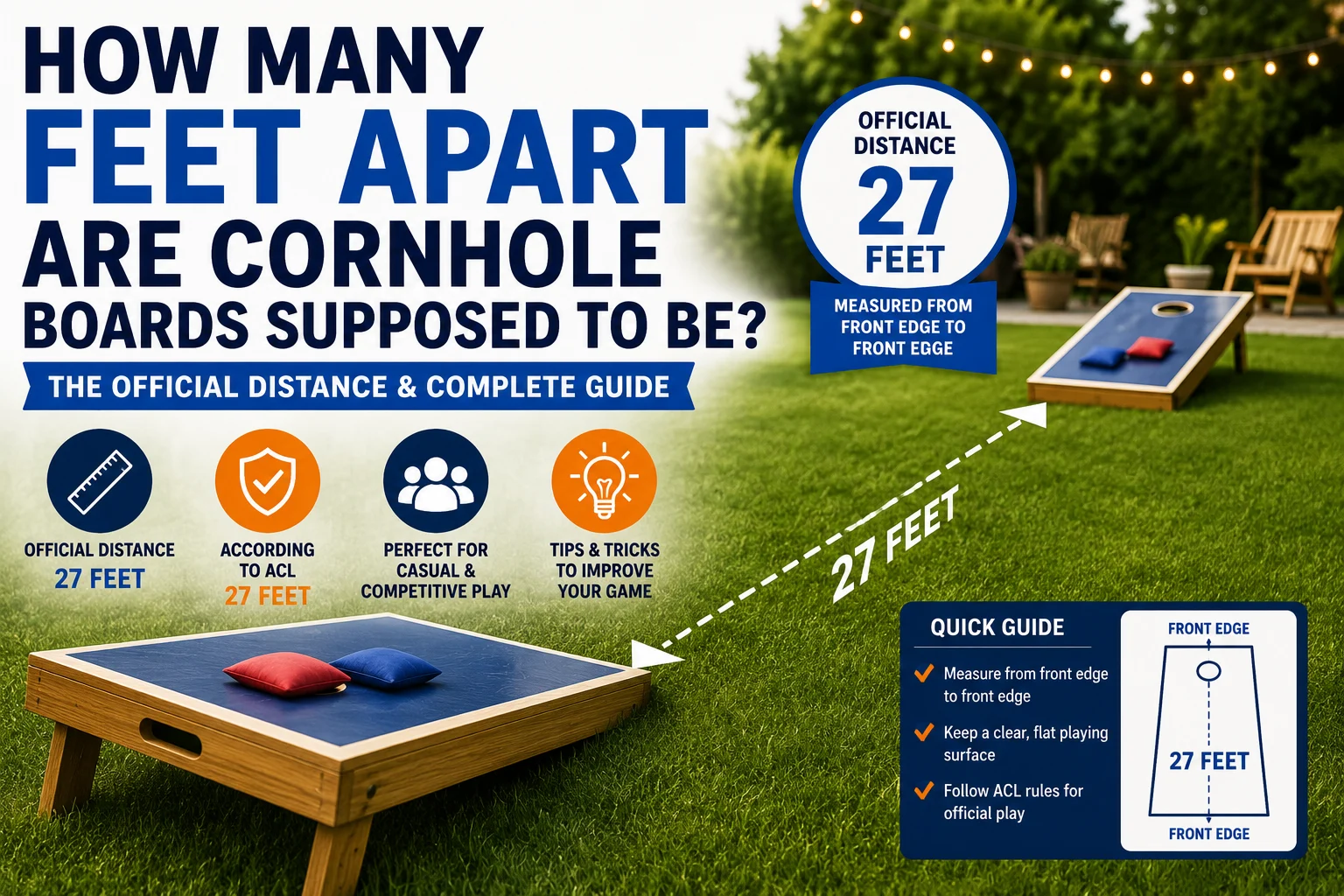
Cornhole is one of the most popular backyard games in North America. Whether you’re playing at a family barbecue, tailgate party, community event, or competitive tournament, proper board placement is essential for fair and enjoyable gameplay.
One of the most common questions new players ask is:
How many feet apart are cornhole boards supposed to be?
The answer depends on whether you’re playing under official tournament rules, recreational backyard rules, or youth variations. While many casual players estimate distances, official cornhole organizations have established precise measurements that ensure consistency and competitive fairness.
In this guide, you’ll learn the official cornhole board distance, how to measure it correctly, court dimensions, differences for children and beginners, setup tips, and frequently asked questions.
Quick Answer
According to official cornhole regulations:
Cornhole boards should be placed 27 feet apart from front edge to front edge.
The distance between the centers of the holes measures:
33 feet
This is the standard used by professional and tournament organizations throughout the United States.
Official Cornhole Distance
The official adult cornhole setup requires:
27 feet between the front edges of both boards.
This means if you stand at the front of one board and measure directly to the front of the opposite board, the distance should be exactly:
27 feet
This measurement is recognized by competitive cornhole organizations and is used in sanctioned tournaments.
Why 27 Feet?
The 27-foot distance creates the ideal balance between:
- Accuracy
- Skill
- Challenge
- Strategy
Shorter distances make the game too easy for experienced players.
Longer distances can reduce scoring and increase difficulty beyond what most recreational players enjoy.
The 27-foot standard has become widely accepted because it provides consistent gameplay for players of varying skill levels.
Front Edge vs. Hole-to-Hole Distance
Many players become confused because two measurements are often discussed.
Front Edge to Front Edge
Official measurement:
27 feet
This is the standard setup distance.
Hole Center to Hole Center
Since each board is 4 feet long and the hole is positioned 9 inches from the back edge, the hole centers are approximately:
33 feet apart
This measurement is useful for understanding throwing distance but is not used when setting up the boards.
Official Cornhole Court Dimensions
A complete cornhole court includes more than just board spacing.
Board Size
Official boards measure:
2 feet×4 feet
or:
- 24 inches wide
- 48 inches long
Hole Size
The hole diameter is:
6 inches
Hole Placement
The center of the hole is positioned:
9 inches from the back edge
and centered from side to side.
Court Layout
A regulation cornhole court generally requires:
- 8–10 feet of width
- Approximately 45 feet of total length
This allows room for:
- Players
- Spectators
- Tossing lanes
- Safe movement
Cornhole Distance for Recreational Play
Not everyone has enough space for a full-size court.
Many backyard players use shorter distances.
Common recreational setups include:
Beginner Distance
15 to 21 feet
Ideal for:
- New players
- Casual games
- Smaller yards
Intermediate Distance
24 feet
Offers a moderate challenge.
Official Distance
27 feet
Used for serious competition.
Cornhole Distance for Kids
Children often benefit from shorter throwing distances.
Recommended youth distances include:
Ages 6–8
12 to 15 feet
Ages 9–12
15 to 21 feet
Teenagers
21 to 27 feet
depending on skill level.
How to Measure Cornhole Board Distance
Accurate setup is important for consistent gameplay.
Step 1: Position the First Board
Place the board on a flat surface.
Step 2: Locate the Front Edge
Identify the lower front edge closest to players.
Step 3: Measure Straight Ahead
Using a tape measure:
27 feet
from the front edge of the first board.
Step 4: Place the Second Board
Align the front edge of the second board with the measurement.
Step 5: Verify Alignment
Ensure:
- Boards face each other directly.
- Tossing lanes remain parallel.
Indoor vs Outdoor Setup
Outdoor Cornhole
Backyards provide flexibility for regulation distances.
Benefits include:
- Larger playing areas
- Natural ventilation
- Easier tournament setups
Indoor Cornhole
Indoor spaces sometimes require shorter distances due to space limitations.
Many players adapt by using:
- 21-foot spacing
- 24-foot spacing
while maintaining official board specifications.
Why Proper Distance Matters
Correct spacing affects:
Fairness
Equal conditions for all players.
Skill Development
Consistent distances improve accuracy.
Tournament Readiness
Practicing at regulation distance prepares players for competition.
Enjoyment
Proper setup creates balanced gameplay.
Professional Cornhole Tournaments
Competitive organizations use strict standards.
Tournament courts typically feature:
- 27-foot board spacing
- Regulation boards
- Regulation bags
- Defined player boxes
This ensures consistency across all events.
Cornhole Throwing Strategy
Board distance influences throwing technique.
Players often adjust:
- Arc height
- Spin rate
- Release angle
- Throwing power
based on the official 27-foot setup.
Common Cornhole Setup Mistakes
Measuring Hole-to-Hole
Many players mistakenly use hole distance instead of front-edge distance.
The correct measurement is:
Front edge to front edge.
Uneven Ground
Boards should be placed on level surfaces.
Uneven setups affect gameplay significantly.
Incorrect Alignment
Boards must face each other directly.
Misalignment creates unfair throwing angles.
Shortened Distances
While acceptable for recreation, shortened distances can create unrealistic practice conditions for tournament players.
Space Needed for a Regulation Court
To comfortably accommodate players:
Length
A court typically requires:
45 feet or more
Width
Recommended width:
8 to 10 feet
Cornhole and Backyard Entertainment
The official distance makes cornhole enjoyable for:
- Family gatherings
- Cookouts
- Tailgates
- Company events
- Weddings
- Community festivals
Because equipment is portable, setup can be completed quickly almost anywhere.
Frequently Asked Questions
How many feet apart are cornhole boards supposed to be?
Officially:
27 feet from front edge to front edge.
What is the distance between cornhole holes?
Approximately:
33 feet center to center.
Can beginners use shorter distances?
Yes.
Many beginners start at:
15–21 feet.
What is the official board size?
Regulation boards measure:
2 feet×4 feet
How far apart should cornhole boards be for kids?
Typically:
12–21 feet depending on age and skill level.
Tips for Better Cornhole Setup
Use a Tape Measure
Avoid estimating distances.
Choose Flat Ground
This ensures fair play.
Secure the Boards
Prevent movement during games.
Maintain Consistent Distances
Practice under the same conditions you’ll use during competition.
Conclusion
So, how many feet apart are cornhole boards supposed to be?
The official answer is:
27 feet apart from the front edge of one board to the front edge of the other board.
This regulation distance is used in competitive tournaments and provides the ideal balance of challenge, accuracy, and enjoyment. While recreational players and children may choose shorter distances, practicing at the official 27-foot spacing helps improve skills and prepares players for tournament-level competition. Whether you’re setting up a backyard game, organizing a community event, or preparing for serious competition, proper board placement is one of the most important factors in creating a fair and enjoyable cornhole experience.