

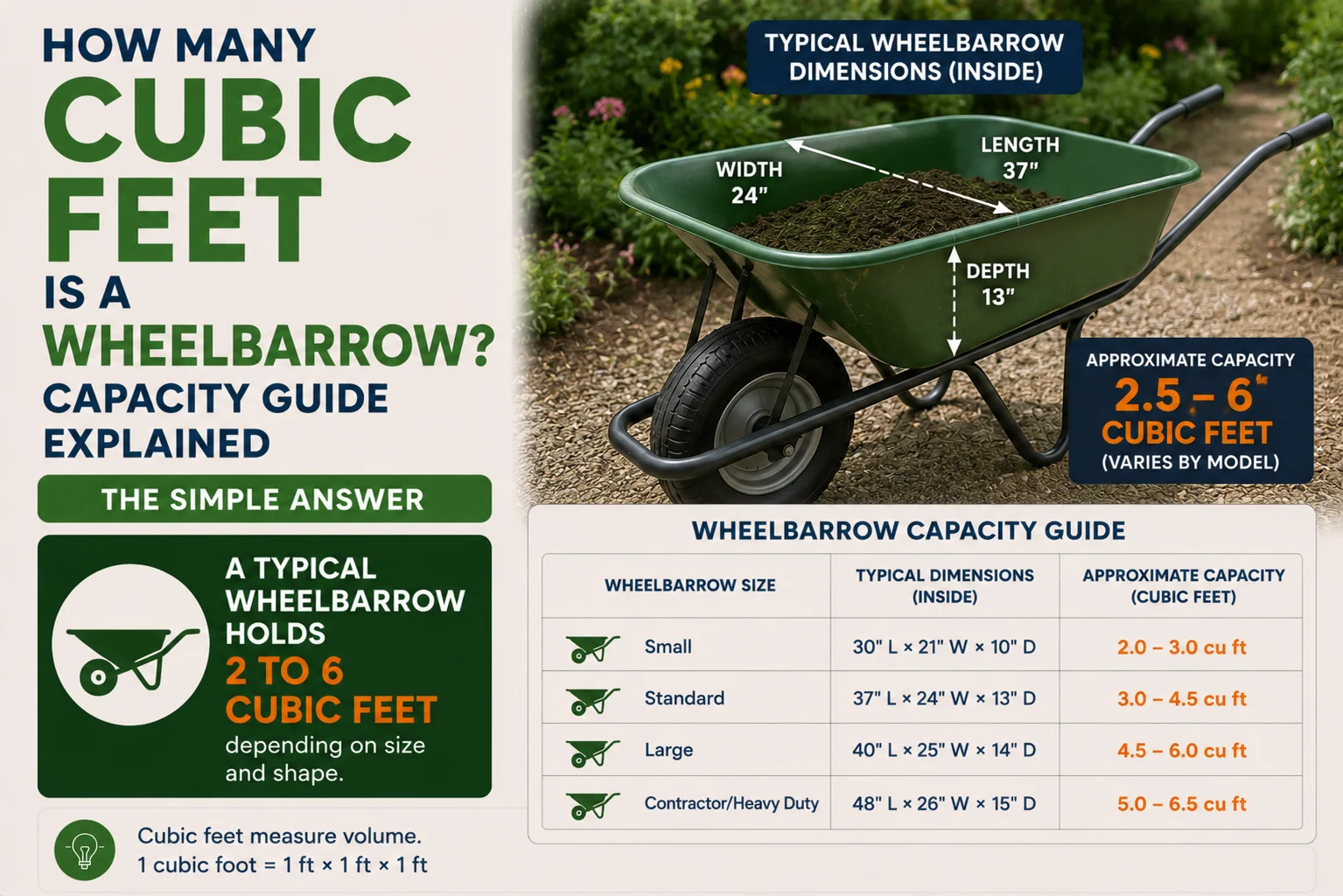
If you are wondering how many cubic feet is a wheelbarrow, the answer depends on the size and type of wheelbarrow, but most standard wheelbarrows hold between 4 and 6 cubic feet of material when filled level.
Some heavy-duty construction wheelbarrows can hold up to 8 cubic feet or more, especially when loaded in a “heaped” (mounded) position.
Understanding wheelbarrow capacity is important for gardening, construction, landscaping, and any job that involves moving soil, gravel, or debris.
The Short Answer: Wheelbarrow Capacity in Cubic Feet
Most common wheelbarrows fall into these ranges:
- Small wheelbarrow: 2–4 cubic feet
- Standard wheelbarrow: 4–6 cubic feet
- Construction wheelbarrow: 6–8+ cubic feet
4 \text{ to } 6\ \text{cubic feet (standard wheelbarrow range)
So, the most typical answer to how many cubic feet is a wheelbarrow is:
👉 About 5 cubic feet on average
Why Wheelbarrow Capacity Varies
Wheelbarrow size is not standardized, so capacity depends on:
- Tray size (length, width, depth)
- Material (plastic vs steel)
- Wheel design (single vs dual wheel)
- Intended use (gardening vs construction)
- Load type (soil, gravel, mulch, concrete)
Different jobs require different wheelbarrow sizes.
Standard Wheelbarrow Sizes in Cubic Feet
Small Wheelbarrows
- Capacity: 2–4 cubic feet
- Best for: home gardening, light yard work
These are easier to maneuver but carry less material per trip.
Medium Wheelbarrows (Most Common)
- Capacity: 4–6 cubic feet
- Best for: landscaping, DIY projects
5\ \text{cubic feet (average wheelbarrow capacity)
This is the most widely used size for residential and construction work.
Large Construction Wheelbarrows
- Capacity: 6–8+ cubic feet
- Best for: heavy-duty jobs, construction sites
These reduce the number of trips needed but can be harder to push when fully loaded.
Heaped vs Level Capacity Explained
Wheelbarrow capacity is measured in two ways:
Level Load
Material is flat and even with the edges.
Heaped Load
Material is piled above the edges.
Heaped capacity can increase total volume by 10–30%.
What Affects Wheelbarrow Volume
Several factors influence how much a wheelbarrow can hold:
- Depth of the tray
- Shape of the basin
- Weight limits
- Material density (soil vs gravel vs concrete)
- User strength and balance
Heavy materials may reduce practical capacity even if volume allows more.
Real-World Uses of Wheelbarrow Capacity
Gardening
- Soil, mulch, compost
- Small loads around 4–5 cubic feet per trip
Construction
- Gravel, sand, cement mix
- Heavier loads often closer to 3–5 cubic feet
Landscaping
- Rocks, sod, debris
- Medium loads for efficiency and safety
Wheelbarrow Capacity Comparison Table
| Type | Cubic Feet | Typical Use |
|---|---|---|
| Small | 2–4 cu ft | Gardening |
| Standard | 4–6 cu ft | Home projects |
| Large | 6–8+ cu ft | Construction |
Common Mistakes When Estimating Load
Overloading the Wheelbarrow
Too much weight can make it unstable or unsafe.
Confusing Weight with Volume
Cubic feet measures space, not weight.
Ignoring Material Type
Wet soil weighs much more than dry mulch.
Assuming All Wheelbarrows Are the Same
Sizes vary widely between brands.
Expert Tips
- Match wheelbarrow size to job type
- Don’t exceed comfortable lifting capacity
- Use smaller loads for heavy materials
- Choose dual-wheel models for stability
- Clean after use to maintain capacity and balance
Why Wheelbarrow Capacity Matters
Understanding how many cubic feet is a wheelbarrow helps you:
- Estimate project time
- Plan material transport
- Avoid overloading injuries
- Improve efficiency on job sites
- Choose the right tool for the job
FAQs
1. How many cubic feet is a wheelbarrow?
Most wheelbarrows hold about 4–6 cubic feet.
2. What is the average wheelbarrow size?
The average is around 5 cubic feet.
3. Can a wheelbarrow hold a yard of material?
No, one cubic yard equals 27 cubic feet—about 5–6 wheelbarrow loads.
4. What is a heavy-duty wheelbarrow capacity?
Up to 8 cubic feet or more.
5. Does material type affect capacity?
Yes, heavier materials reduce practical load size.
Conclusion
So, how many cubic feet is a wheelbarrow? The typical answer is about 4 to 6 cubic feet, with most standard wheelbarrows averaging around 5 cubic feet.
Wheelbarrows are essential tools for moving soil, gravel, and construction materials efficiently. Knowing their capacity helps you plan better, work faster, and avoid overloading on the job.