
When planning a home, remodeling, or evaluating property listings, one of the most common questions homeowners ask is:
How many feet wide is a 2-car garage?
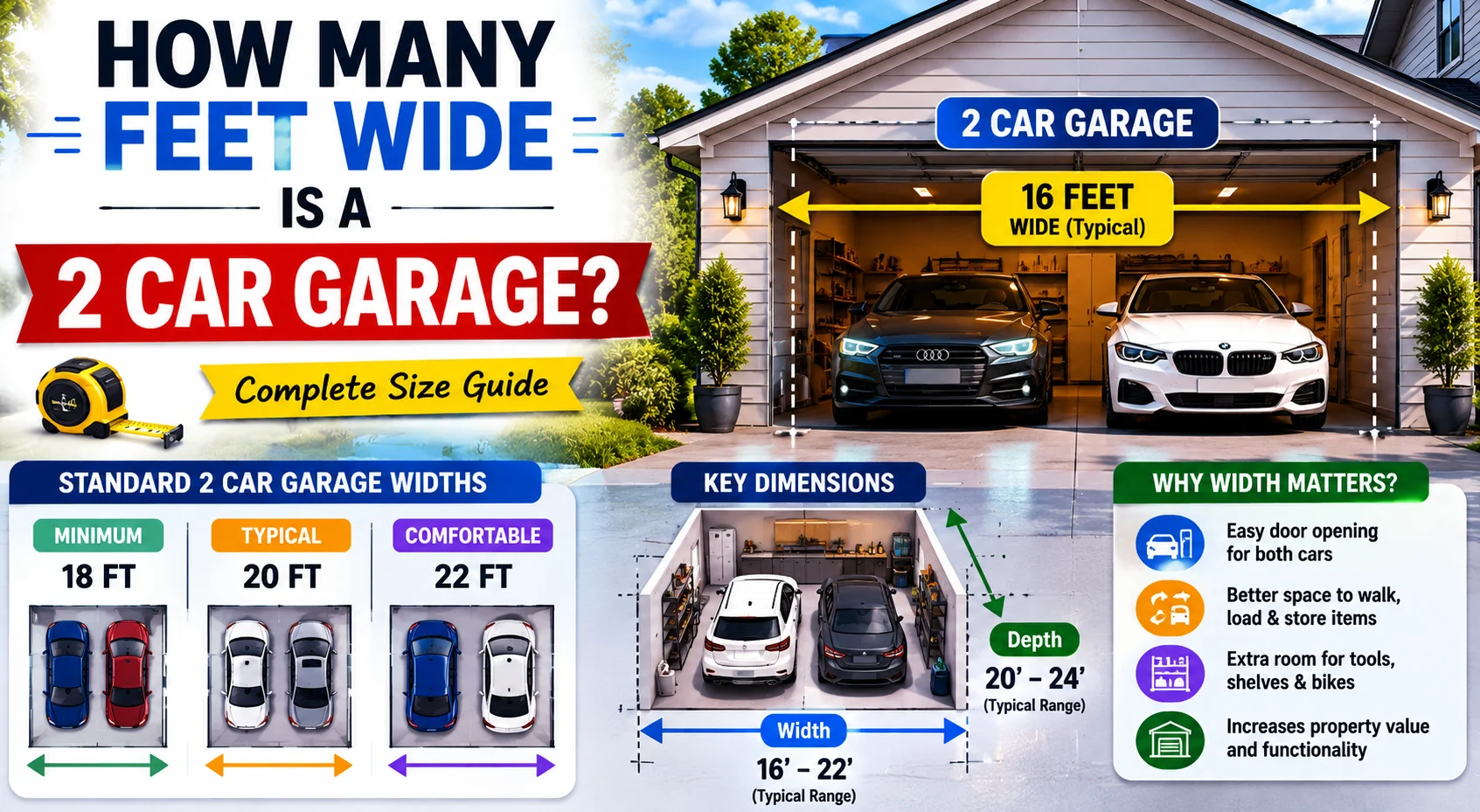
A 2-car garage is one of the most popular garage sizes in residential construction, but its width can vary depending on design, vehicle size, storage needs, and local building codes. While there is a standard range, not all 2-car garages are built the same.
In this article, we’ll break down standard widths, minimum vs. comfortable sizing, real-world examples, and what to consider when choosing the right garage size for your home.
Quick Answer
A standard 2-car garage is typically:
20 to 24 feet wide
Most modern homes use:
22 to 24 feet wide
However, more spacious designs may be:
26 to 28 feet wide
for added comfort and storage space.
What Is a 2-Car Garage?
A 2-car garage is a residential structure designed to:
- Park two vehicles side-by-side
- Provide storage space
- Offer access to a home or driveway
It is one of the most common garage types in suburban housing.
Unlike parking lots, garage space is enclosed, so interior clearance matters more than just fitting cars.
Standard 2-Car Garage Width
The most widely accepted standard width is:
20 to 24 feet
This range is based on average car widths and required clearance between vehicles and walls.
Why Garage Width Matters
Garage width affects:
- Door opening space
- Ease of entering and exiting vehicles
- Storage along side walls
- Risk of door dings
- Overall usability
A garage that is too narrow becomes difficult to use, even if it technically fits two cars.
Average Car Width for Reference
To understand garage sizing, consider typical vehicle widths:
Compact Cars
5.5 to 6 feet wide
Sedans
6 to 6.5 feet wide
SUVs and Trucks
6.5 to 7.5 feet wide
With Door Clearance
Once you include space to open doors:
+2 to 3 feet per side
This is why garages must be significantly wider than just two cars side-by-side.
Minimum vs Comfortable Garage Width
Minimum Functional Width
A tight but usable garage:
20 feet wide
- Fits two small cars
- Limited storage space
- Tight door clearance
Standard Comfortable Width
Most builders recommend:
22 to 24 feet wide
- Comfortable door opening
- Easier parking
- Small storage space
Premium Spacious Width
Luxury or custom homes often use:
26 to 30 feet wide
- Extra storage
- Workbench space
- Easier maneuvering
Garage Width vs Length (Important Distinction)
Garage size includes two dimensions:
Width (side-to-side)
20 to 28 feet
Length (front-to-back)
20 to 24 feet
Length is usually similar across designs, but width varies more based on comfort level.
Typical Garage Dimensions
Here are common configurations:
Basic 2-Car Garage
- 20 ft × 20 ft
- Very tight fit
Standard Garage
- 22 ft × 22 ft
- Most common in modern homes
Spacious Garage
- 24 ft × 24 ft
- Comfortable parking and storage
Oversized Garage
- 28 ft × 24 ft
- Extra workspace or storage
How Cars Fit Inside a 2-Car Garage
Example:
- Two 6-foot-wide cars = 12 feet total
- Add clearance on both sides = 8–12 feet
- Add spacing between cars = 2–3 feet
Total:
22 to 24 feet minimum
Garage Door Width vs Garage Width
Garage doors are narrower than total garage width.
Typical Double Garage Door:
16 to 18 feet wide
This leaves extra wall space on both sides for structure and storage.
Why Some 2-Car Garages Feel Small
Even if two cars fit technically, garages can feel cramped due to:
- Lack of side clearance
- Wide SUVs or trucks
- Storage clutter
- Narrow door placement
Ideal Garage Width for Modern Vehicles
Because cars are getting larger, modern recommendations are:
24 to 26 feet wide preferred
This ensures:
- Comfortable entry/exit
- Storage space
- Future-proofing for larger vehicles
Storage Space in a 2-Car Garage
Extra width allows for:
- Tool cabinets
- Bikes
- Lawn equipment
- Shelving units
A standard garage often sacrifices storage for vehicle space.
Common Garage Design Mistakes
1. Building Too Narrow
20 ft garages can feel tight with SUVs.
2. Ignoring Door Swing Space
Doors need room to open fully.
3. No Storage Planning
Garages fill quickly without shelving design.
4. Not Considering Future Vehicles
Larger cars require more space.
Real Estate Standards
Builders typically classify garages as:
| Type | Width |
|---|---|
| Compact 2-car | 20 ft |
| Standard 2-car | 22–24 ft |
| Large 2-car | 26–28 ft |
How to Measure Garage Space Properly
To measure:
- Measure wall-to-wall width
- Subtract structural framing
- Check door clearance
- Account for storage needs
How Much Space Each Car Gets
In a 24-foot-wide garage:
24÷2=12 feet per car zone
This includes clearance and door swing space.
FAQs
How many feet wide is a standard 2-car garage?
22 to 24 feet
Can two SUVs fit in a 20-foot garage?
Yes, but it will be tight.
What is the best garage width?
24 feet or more
Is a 2-car garage really enough for two large vehicles?
It depends, but wider garages are strongly recommended.
Key Takeaways
- Standard 2-car garage width: 20–24 feet
- Comfortable modern size: 22–26 feet
- Premium garages: 26–30 feet
- Wider garages improve storage and usability
- Vehicle size has increased over time, making wider garages more practical
Conclusion
So, how many feet wide is a 2-car garage?
The answer is:
A typical 2-car garage is 20 to 24 feet wide, with 22 to 24 feet being the modern standard for comfortable use.
While smaller garages can technically fit two vehicles, wider designs provide much better usability, storage space, and long-term practicality. Choosing the right garage width ensures easier parking, fewer dents, and a more functional space for everyday living.