

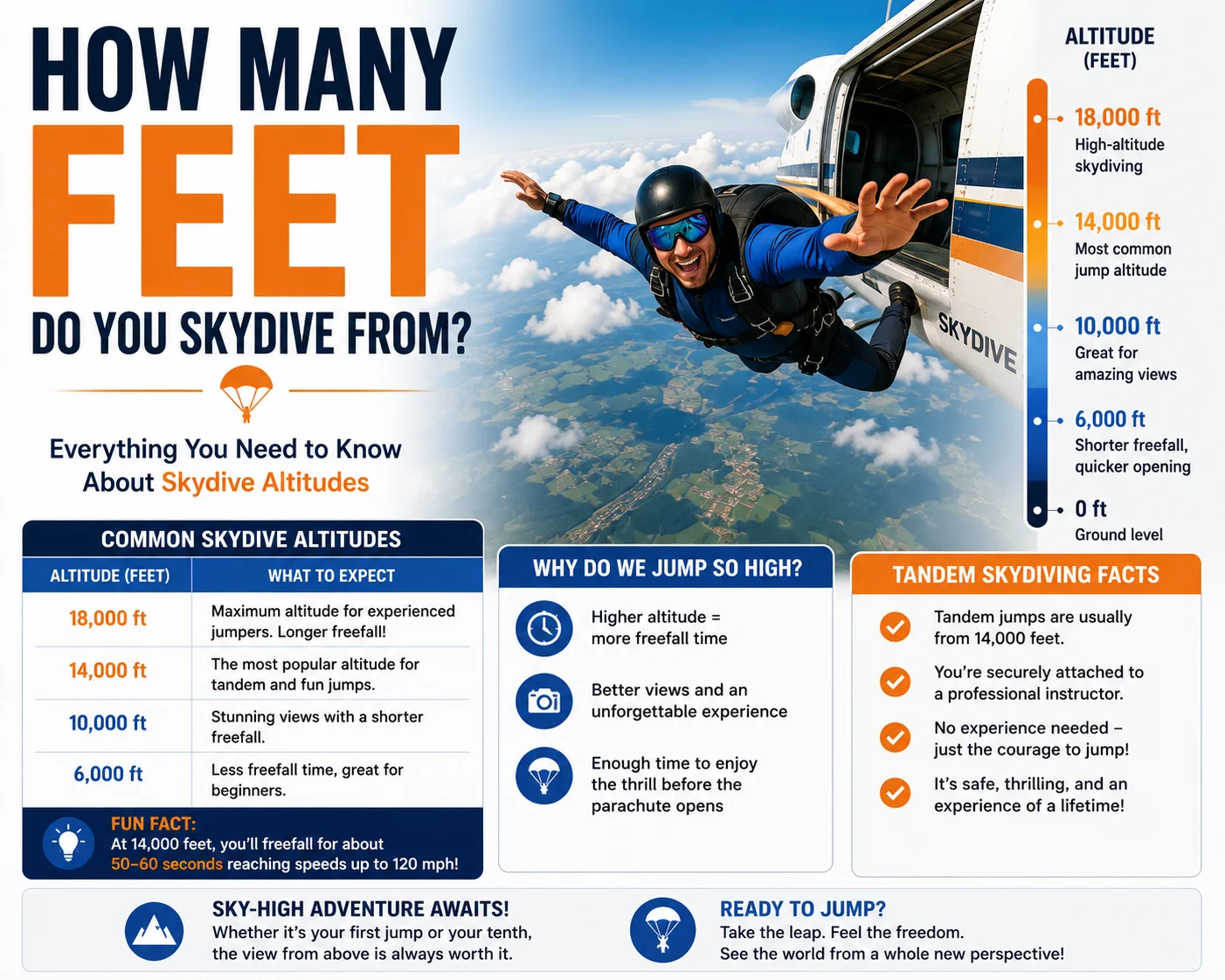
If you have ever watched someone jump out of an airplane, you have probably wondered: how many feet do you skydive from? The answer depends on the type of jump, weather conditions, and the skydiving company, but most recreational skydives happen between 10,000 and 14,000 feet above the ground.
For many people, the idea of stepping out of an airplane thousands of feet in the air sounds both exciting and terrifying. Yet skydiving has become one of the world’s most popular adventure activities. Understanding the altitude of a skydive can help you know what to expect, how long the freefall lasts, and why different jumps happen at different heights.
In this guide, you’ll learn about standard skydiving altitudes, freefall times, parachute deployment, safety considerations, and what makes each jump unique.
The Standard Height for Most Skydives
The average recreational skydive takes place from approximately 14,000 feet above ground level (AGL).
At this height, skydivers enjoy around 60 seconds of freefall before opening their parachutes. Many tandem skydiving centers choose 14,000 feet because it provides the perfect balance between excitement and affordability.
Typical skydiving altitudes include:
| Jump Height | Approximate Freefall Time |
|---|---|
| 10,000 feet | 30 seconds |
| 12,000 feet | 45 seconds |
| 14,000 feet | 60 seconds |
| 15,000 feet | 70 seconds |
| 18,000 feet | 90 seconds |
Most first-time skydivers will jump from somewhere within this range.
Common Skydiving Altitudes and Freefall Times
Different skydiving experiences begin at different heights. Let’s look at the most common options.
Jumps from 10,000 Feet
A jump from 10,000 feet is often the minimum altitude offered at smaller drop zones.
Characteristics include:
- Around 30 seconds of freefall.
- Lower operating costs.
- Shorter plane ride.
- Popular for training exercises.
Although 10,000 feet is lower than premium skydiving packages, it still delivers an unforgettable experience.
Jumps from 14,000 Feet
A jump from 14,000 feet is the industry standard for tandem skydiving.
At this altitude, you can expect:
- Around one minute of freefall.
- Speeds of about 120 miles per hour.
- Excellent views.
- Plenty of time to enjoy the experience.
Many skydivers consider this height the perfect balance between thrill and value.
Jumps from 18,000 Feet
High-altitude jumps begin around 18,000 feet and can go much higher.
These jumps often require:
- Supplemental oxygen.
- Specialized equipment.
- Extra training.
- More preparation.
An 18,000-foot jump provides up to 90 seconds of freefall, making it one of the longest recreational skydiving experiences available.
Why Skydivers Jump From Different Heights
There is no single altitude for every jump. Several factors determine how high skydivers go.
Type of Skydive
Different forms of skydiving require different heights.
Examples include:
- Tandem skydiving.
- Solo skydiving.
- Formation skydiving.
- Military jumps.
- Wingsuit flying.
- Training exercises.
Wingsuit pilots, for example, often prefer higher altitudes because they need extra time to glide.
Weather Conditions
Weather plays a major role in determining jump altitude.
Strong winds, cloud cover, storms, and poor visibility can force skydiving companies to reduce altitude or cancel jumps altogether.
Pilots and instructors monitor conditions carefully before every flight.
Aircraft Capabilities
Not all airplanes can reach the same heights.
Common skydiving aircraft include:
- Cessna Caravan.
- Twin Otter.
- PAC 750.
- King Air.
Larger aircraft can climb faster and carry more passengers, allowing skydiving centers to offer higher jumps.
How Long Does Freefall Last?
Many people asking how many feet do you skydive from are really wondering how long they get to experience freefall.
Freefall begins the moment you leave the airplane and ends when the parachute opens.
The duration depends mainly on altitude.
| Altitude | Freefall Time |
|---|---|
| 8,000 feet | 15–20 seconds |
| 10,000 feet | 30 seconds |
| 12,000 feet | 45 seconds |
| 14,000 feet | 60 seconds |
| 18,000 feet | 90 seconds |
During freefall, skydivers accelerate until reaching terminal velocity, which is usually around 120 mph (193 km/h).
Body position, clothing, and equipment can slightly change this speed.
When Do Skydivers Open Their Parachutes?
Most parachutes open between 2,500 and 5,500 feet above the ground.
For tandem skydiving, instructors often deploy the parachute at around 5,000 feet. Solo skydivers may wait a little longer depending on their experience.
The parachute ride itself usually lasts between five and seven minutes.
During this stage, jumpers can:
- Enjoy panoramic views.
- Steer the parachute.
- Practice gentle turns.
- Prepare for landing.
Modern parachutes are highly reliable and include backup systems for additional safety.
Tandem Skydiving vs. Solo Skydiving
The altitude and overall experience can vary depending on the type of jump.
| Feature | Tandem Skydiving | Solo Skydiving |
|---|---|---|
| Typical altitude | 10,000–14,000 feet | 10,000–18,000 feet |
| Instructor attached | Yes | No |
| Training required | Minimal | Extensive |
| Freefall control | Instructor | Skydiver |
| Ideal for beginners | Yes | Usually not |
For first-time jumpers, tandem skydiving is by far the most common option.
The instructor handles:
- Equipment checks.
- Exit procedures.
- Parachute deployment.
- Landing.
This allows beginners to focus on enjoying the experience.
How High Is 14,000 Feet Compared to Everyday Objects?
Numbers can be difficult to picture, so let’s compare 14,000 feet to familiar landmarks.
| Object | Approximate Height |
|---|---|
| Eiffel Tower | 1,083 feet |
| Empire State Building | 1,454 feet |
| Burj Khalifa | 2,717 feet |
| Commercial airplane cruising altitude | 35,000 feet |
| Typical skydive altitude | 14,000 feet |
A skydiving jump from 14,000 feet is:
- About 13 Empire State Buildings stacked together.
- More than five Burj Khalifas tall.
- Less than half the cruising altitude of a passenger jet.
This perspective helps explain why skydiving offers such incredible views.
Is Skydiving From High Altitudes Safe?
Skydiving may seem dangerous, but modern equipment and strict safety standards have made it much safer than many people assume.
Professional skydiving centers follow detailed procedures, including:
- Regular aircraft inspections.
- Backup parachute systems.
- Certified instructors.
- Weather monitoring.
- Emergency training.
- Equipment maintenance.
Before jumping, every participant receives instructions covering:
- Proper body position.
- Landing techniques.
- Communication signals.
- Safety procedures.
First-time jumpers should always choose a reputable skydiving center with experienced staff.
What Happens During a Typical Skydive?
Knowing the sequence of events can make the experience less intimidating.
1. Check-In and Training
You arrive at the drop zone, sign paperwork, and attend a safety briefing.
2. Gear Fitting
The instructor helps you put on:
- Harness.
- Goggles.
- Jumpsuit.
- Altimeter.
3. Airplane Ride
The aircraft climbs to around 10,000–14,000 feet. This ascent usually takes 15–20 minutes.
4. The Jump
The door opens, and you leave the plane with your instructor.
5. Freefall
You experience rapid acceleration and spectacular views.
6. Parachute Deployment
At the correct altitude, the parachute opens.
7. Landing
After a controlled descent, you land back at the drop zone.
The entire experience typically lasts two to three hours, even though the actual jump itself takes only a few minutes.
Common Myths About Skydiving Heights
Many misconceptions surround skydiving.
Myth 1: Skydivers Jump From Passenger Plane Altitudes
Commercial airlines usually fly at 30,000–40,000 feet, much higher than recreational skydiving aircraft.
Myth 2: Higher Jumps Feel More Dangerous
Most jumpers cannot easily tell the difference between 10,000 and 14,000 feet once they leave the aircraft.
Myth 3: You Can’t Breathe During Freefall
Breathing normally during freefall is completely possible.
Myth 4: The Parachute Opens Immediately
Skydivers enjoy a period of freefall before deploying the parachute.
Tips for First-Time Skydivers
If you’re planning your first jump, keep these suggestions in mind.
- Wear comfortable clothing.
- Eat a light meal beforehand.
- Stay hydrated.
- Listen carefully during training.
- Relax and trust your instructor.
- Avoid alcohol before jumping.
- Check weather forecasts.
- Ask questions if you’re uncertain.
Many first-time jumpers say the anticipation before takeoff is more intense than the jump itself.
FAQs
How many feet do you skydive from on a tandem jump?
Most tandem skydives happen between 10,000 and 14,000 feet, with 14,000 feet being the most common altitude.
How long does a skydive last from 14,000 feet?
The freefall usually lasts about 60 seconds, while the parachute ride lasts another five to seven minutes.
At what altitude do skydivers open their parachutes?
Most skydivers deploy their parachutes between 2,500 and 5,500 feet above the ground.
Do higher skydives cost more?
Yes. Higher jumps generally cost more because they require additional fuel, time, and equipment.
What is the highest recreational skydive?
Some commercial operators offer jumps from 18,000 feet or even higher, often with supplemental oxygen.
Conclusion
So, how many feet do you skydive from? Most people jump from around 14,000 feet, which provides approximately one minute of thrilling freefall before the parachute opens. Depending on the type of skydive, jump heights can range from 10,000 feet to more than 18,000 feet.
Whether you’re planning your first tandem jump or simply curious about skydiving, understanding altitude helps you know exactly what to expect. If skydiving is on your bucket list, research local drop zones, compare jump packages, and get ready for an unforgettable adventure in the sky.